|
 |
 | | | | | | |||||||||||||||||||||||||||||||||||||||||||||||||||||||||||||||||||||||||||||||||||||
| | | You are in: UK: England | |||||||||||||||||||||||||||||||||||||||||||||||||||||||||||||||||||||||||||||||||||||||
|
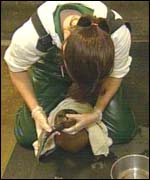
| | Monday, 27 January, 2003, 05:43 GMT Virus hit seals released  The seals were released into the North Sea Three seals who survived a deadly virus that wiped out more than 2,000 of the mammals along the UK's east coast have been released back into the wild. The three animals were the first batch of seals to survive the Phocine Distemper Virus (PDV) to be set free by the Royal Society for the Prevention of Cruelty to Animals (RSPCA). They rejoined the devastated colony at Blakeney Point, on the north Norfolk coast on Friday. More than half of the common seal population of about 4,000 in the Wash at Norfolk and Lincolnshire, and on the north Norfolk coast, died when the virus hit in August last year. Liquidised fish The pups are among 40 nursed back to health at the RSPCA's wildlife hospital at East Winch, near King's Lynn, Norfolk. Alison Charles, the hospital's deputy manager, who saw the first of the seals leave by boat, said: "It was heartbreaking to watch the seals die despite our best efforts, but knowing these survivors have a future in the wild has made it all worthwhile."
Most of the 164 seals taken to the hospital were very ill and underweight. The sick animals received rehydration fluids, progressing to a nutritious diet of liquidised fish, said the RSPCA. As they improved the seal pups were moved from the isolation ward to intermediate pools, and then to outdoor pools once they could feed themselves. The survival rate of seals hit by the virus is 25%. There is no treatment for the virus and no prevention for animals in the wild. In 1988 half of the 3,000 seals in the Wash and on the north Norfolk coast died as a result of secondary infections from the virus, the spokeswoman. She added: "It has taken 14 years for the population of common seals to return to its pre-1988 numbers but the effects of the 2002 outbreak will not be known until summer 2003 when a new count is made." | |    See also: 16 Jan 03 | England 18 Sep 02 | England 18 Sep 02 | England 11 Sep 02 | England 14 Aug 02 | Science/Nature 13 Aug 02 | UK 12 Jul 02 | Science/Nature Internet links: The BBC is not responsible for the content of external internet sites Top England stories now: Links to more England stories are at the foot of the page. | |||||||||||||||||||||||||||||||||||||||||||||||||||||||||||||||||||||||||||||||||||||
 | |
|  E-mail this story to a friend E-mail this story to a friend |
| |
| Links to more England stories |
| | | ||
 | ||||
 | | Back to top
| ||
| ---------------------------------------------------------------------------------- To BBC Sport>> | To BBC Weather>> | To BBC World Service>> ---------------------------------------------------------------------------------- © MMIII | News Sources | Privacy |