
|
 |
 | | | | | | ||||||||||||||||||||||||||||||||||||||||||||||||||||||||||||||||||||||||||||||||||||||
| | | You are in: UK: England | ||||||||||||||||||||||||||||||||||||||||||||||||||||||||||||||||||||||||||||||||||||||||
|
| | Friday, 15 November, 2002, 16:22 GMT Peak's Roman past revealed 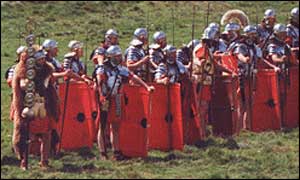 The Romans occupied Britain in the 1st Century AD A new study has shown the extent of Roman occupation in part of Derbyshire. The four year survey identified around 140 sites across the Peak District National Park. It is hoped the work will protect the archaeological remains from accidental destruction. But those identified are thought to be just a small part of the sites which once existed.
Bill Bevan, who carried out the study for the Peak District National Park Authority, said: "We knew a lot from members of the public and researchers but it was bits and pieces. "At the peak park we felt it was time to have a look at them and really know what was where." 'Well preserved' "As it turned out we found a lot, hidden away in quiet corners." The study focussed on remains from the Romano-British period running from the 1st to the 5th Century AD. Mr Bevan said: "We were surprised at how many sites there were and in many cases how well preserved they were. Still buried "Of the 140 or so, around 70 were settlements ranging from single buildings to hamlets, complete with evidence of yards and walls or hedges." Examples of traditional round buildings being replaced by Roman-style square ones were unearthed, alongside pottery plates and bowls. Mr Bevan said:" We found most sites in areas which had not been intensively farmed, which means many more settlements have either been destroyed or are still buried under existing buildings. "The 140 sites we found are just the tip of the iceberg." | |   See also: 13 Nov 02 | England 18 Jul 02 | England 08 Jul 02 | England Internet links: The BBC is not responsible for the content of external internet sites Top England stories now: Links to more England stories are at the foot of the page. | ||||||||||||||||||||||||||||||||||||||||||||||||||||||||||||||||||||||||||||||||||||||
| |
|  E-mail this story to a friend E-mail this story to a friend |
| |
| Links to more England stories |
| | | ||
 | ||||
 | | Back to top
| ||
| ---------------------------------------------------------------------------------- To BBC Sport>> | To BBC Weather>> | To BBC World Service>> ---------------------------------------------------------------------------------- © MMIII | News Sources | Privacy |





