|
 |
 | | | | | | |||||||||||||||||||||||||||||||||||||||||||||||||||||||||||||||||||||||||||||||||||||||||||||||||||||||||
| | | You are in: UK: Education: Mike Baker | |||||||||||||||||||||||||||||||||||||||||||||||||||||||||||||||||||||||||||||||||||||||||||||||||||||||||||
|
| | Friday, 11 October, 2002, 18:05 GMT 19:05 UK Morris's political pass-the-parcel 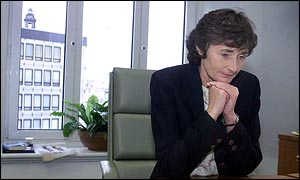 Estelle Morris: One last chance
"Events, dear boy, events!" - Harold Macmillan's warning about the biggest dangers in politics. Estelle Morris must know how he felt. This autumn she has been buffeted by one educational gale after another. First there was the scandal of fraudulent abuse of the government's new Individual Learning Accounts resulting in a huge loss of taxpayers' money. That, though, was just a prelude to the disastrous events that have befallen the start of the new school year. Bang, bang, bang Indeed, in many places, the new school year didn't even start on time as the Criminal Records Bureau had failed to keep up with the new, tougher vetting requirements for teachers and other school staff. No sooner was that issue sorted out, at least temporarily, than the storm over A-level grading broke. It has brought the sacking of the head of the Qualifications and Curriculum Authority, shaken public confidence in the examination system, and caused weeks of anxiety to tens of thousands of students, teachers and parents.
This triple assault has left Estelle Morris on the ropes. Despite some rocky moments, she is still coming out fighting. But this series of mishaps has prompted muttering in government circles, including amongst Cabinet colleagues. One more mistake, they say, and she's out. It is hard. But it is also politics. In fact, Ms Morris has good excuses in each of these cases. As an education minister she was never directly responsible for the Individual Learning Accounts which were, anyway, introduced by her predecessor, David Blunkett. Not her fault The Criminal Records Bureau fiasco was not of her making. The bureau itself is a Home Office Agency. As such it is answerable to - yes, that man again - David Blunkett. The Department for Education is only its customer. Moreover, the crucial decision to tighten up on teacher checks after the Soham murders, which caused the chaos at the start of term, was taken by another minister while Ms Morris was on her summer holiday abroad. Indeed, it shows her decency and loyalty to colleagues that she did not publicly blame her junior for the error. Finally, the independent inquiry into A-level grading found no evidence of any improper actions or advice from ministers. Even the powerful accusation that the speed of introduction of the A-level reforms was "an accident waiting to happen" leaves little mud sticking to the current education secretary.
Once again, the A-level reforms were led by her predecessor, David Blunkett, and although Ms Morris was a junior minister at the time, A-levels were not part of her responsibilities. So, on one level, she is entirely in the clear. But politics does not work like that. It is a game of pass the parcel. You carry the can if you happen to be the one left holding the unravelling package when the music stops. By last week, it looked as if Ms Morris had just about got away with it. Her reputation as a safe pair of hands had been damaged, certainly, but the general view seemed to be that, providing there were no more embarrassing education headlines, she should survive. And then ... So this week's news that an appeal panel had reinstated two boys who had been expelled for making death threats to a teacher could not have come at a worse time. It wasn't just that the Department for Education needed time out of the limelight, but it came just after Estelle Morris had told the Labour Party conference that "one child threatening or abusing one teacher in a school is one too many".
It also didn't help her position that the Conservatives had finally managed to exert some political pressure on the government with a package of policy reforms. These included the idea - popular with teachers - that the independent appeals panels should be abolished (never mind that they were introduced by a Conservative government). So Ms Morris clearly felt under pressure to back up her tough words at the conference with equally tough action. Instead of limiting herself to criticising the reinstatement, she ordered her officials to push Surrey local education authority into making sure the boys did not return to school but were found places elsewhere. This went down well with the school and with the teacher associations generally. But there was one small problem. The education secretary does not have the power to over-rule, or intervene in any way, with independent appeals panels' decisions. If she had limited her role to vocal support for the school and an offer to mediate, it would have been fine. But this was a high risk gamble. It could work. But to do so, it will take the agreement of the parents of the two boys to set aside their hard-won success in the appeal panel and accept a place at another school or pupil referral unit. Panel is independent Their reaction so far suggests they are not happy to do that. As they point out, they have followed the proper procedures and won the backing of the appeal panel, which took extensive evidence and produced a 16-page document to explain its decision. Amongst their arguments for reinstatement were that this was a first serious offence and the threats were out of character and even the victim, once he knew who had made them, did not believe they would be carried out. The teachers may, with good reason, regard these as inadequate reasons for reinstatement. After all, the teacher who received the threats is still off work suffering from stress. But the fact remains, the independent appeal panel has ruled. Its decision may be hard to fathom but we are told they followed the proper procedures, took account of the evidence, followed government guidelines, and decided the boys deserved a second chance. They may be right. They may be wrong. But they are an independent panel. They cannot be over-ruled. Moved to act A few years back, when there was a similar row over the reinstatement of a disruptive primary pupil in Nottinghamshire, the then education secretary, Gillian Shephard, condemned the decision. But that was all she did; she did not promise the boy would be moved elsewhere. She knew she could not guarantee to deliver that. But Estelle Morris clearly felt she had to be seen to act strongly and quickly. Yet she has no legal powers to back up her promises. Surrey Education Authority feel her intervention has been unhelpful, making it more difficult to reach agreement in a calm atmosphere. She may be lucky. The parents of the two boys may eventually back down. But it is a big gamble. We welcome your comments at educationnews@bbc.co.uk although we cannot always answer individual e-mails. | |
Internet links:  The BBC is not responsible for the content of external internet sites | |||||||||||||||||||||||||||||||||||||||||||||||||||||||||||||||||||||||||||||||||||||||||||||||||||||||||
| |
|  E-mail this story to a friend E-mail this story to a friend |
| | | ||
 | ||||
 | | Back to top
| ||
| ---------------------------------------------------------------------------------- To BBC Sport>> | To BBC Weather>> | To BBC World Service>> ---------------------------------------------------------------------------------- © MMIII | News Sources | Privacy |