
|
 |
 | | | | | | |||||||||||||||||||||||||||||||||||||||||||||||||||||||||||||||||||||||||||||||||||||||||||||||||||||||||||||||||||||||||||||||||||||||||||||||||||||||
| | | You are in: UK: Education | |||||||||||||||||||||||||||||||||||||||||||||||||||||||||||||||||||||||||||||||||||||||||||||||||||||||||||||||||||||||||||||||||||||||||||||||||||||||||
|
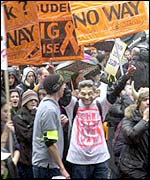
| | Thursday, 16 January, 2003, 23:07 GMT U-turn over student tuition fees  The payment burden will fall on graduates Student tuition fees in England are to rise by up to several thousand pounds - but unlike now the whole amount will be paid after graduation. Up-front tuition fees, currently �1,100 a year, will be dropped - mirroring the existing situation in Scotland. Maintenance grants will be brought back for the very poorest. There will be "golden handcuffs" for people going into public sector work - who will have their debts paid off if they stay in their jobs. Universities will be allowed to charge higher fees - capped at �3,000 to �4,000, it is thought - all to be repaid out of graduate earnings. It is expected that the fees will be covered by a loan which people will start to repay once their earnings reach a certain level, perhaps �12,000. Slipped out The package - leaked to BBC political reporters - is not being confirmed or denied by the Department for Education.
He said then: "Top-up fees is a word that's brought two ideas together. "One is the question of whether you pay up front, i.e. before you start your university course, the other is the question of whether you have varied fees between different universities. "I think we're pretty clear that we'd be charging fees, unlike now, after university, and so you pay through the tax system later on in your life." At the time, his department played down the idea. UK differences The move - expected to be announced in the government's higher education strategy document next week - would represent a big U-turn by Labour in England. To the anger of students, it introduced fees across the UK after the 1997 election. But in Scotland, the executive pays them on behalf of Scottish students at Scottish universities. Instead, graduates contribute �2,000 to a fund for hardship grants for poorer students, starting to pay this when their earnings are at least �10,000. Hardship grants have also been brought in, to a limited extent, in Wales and Northern Ireland - although there, tuition fees are still payable. Variable fees It is not clear how deferred payment would answer the issue of university under-funding - the starting point for the government's search for higher fees. There would be a gap of some years between when people start university and when they start to pay their fees. The idea that some universities might charge more than others is potentially highly divisive. Some have been in favour of higher fees, arguing that they need more money to compete globally. Others object in principle - but might be overtaken by a need to keep up. Their umbrella group, Universities UK, recently accepted that "it is reasonable to expect a private contribution from those students who can afford to make it" - provided there were safeguards to protect poorer students. Mr Clarke also suggested that post-graduate repayment of fees would be in proportion to people's earnings. Help for the poorest The reintroduction of grants for poorer students in England has been widely expected, with ministers wanting to head off the suggestion that they would be deterring the least well off from applying to university. It is understood that it will apply only to the very poorest - a smaller number than the one third of students currently exempt from paying tuition fees. The existing means-tested fees begin to apply once a student's family income is more than �20,480. They then rise on a sliding scale up to the limit of �1,100 per year on incomes over �30,502 Who pays On the latest available statistics, for 2000/01, 34% of the 586,000 students in England and Wales who were dependent on their parents were assessed as being too poor to pay fees and 45% per cent were required to make the full contribution. Among the 100,000 "independent" students - mostly mature students over the age of 25 - 89% made no contribution and 6% the full amount. The Commons education select committee, when it investigated student funding last year, recommended the extension of maintenance allowances paid to poorer students over the age of 16. | |
See also:  07 Jan 03 | Education 01 Jan 03 | Education 17 Dec 02 | Education 04 Dec 02 | Education 16 Jan 03 | Politics Internet links: The BBC is not responsible for the content of external internet sites Top Education stories now: Links to more Education stories are at the foot of the page. | |||||||||||||||||||||||||||||||||||||||||||||||||||||||||||||||||||||||||||||||||||||||||||||||||||||||||||||||||||||||||||||||||||||||||||||||||||||||
 | |
|  E-mail this story to a friend E-mail this story to a friend |
| |
| Links to more Education stories |
| | | ||
 | ||||
 | | Back to top
| ||
| ---------------------------------------------------------------------------------- To BBC Sport>> | To BBC Weather>> | To BBC World Service>> ---------------------------------------------------------------------------------- © MMIII | News Sources | Privacy |






 FORUM
FORUM University fees