|
 |
 | | | | | | ||||||||||||||||||||||||||||||||||||||||||||||||||||||||||||||||||||||||||||||||||||||||||||||||||||||||||||||||||||||||||||||||||||||||||||||||||||||||||||||||||||||
| | | You are in: UK: Education | ||||||||||||||||||||||||||||||||||||||||||||||||||||||||||||||||||||||||||||||||||||||||||||||||||||||||||||||||||||||||||||||||||||||||||||||||||||||||||||||||||||||||
|
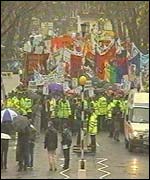
| | Wednesday, 4 December, 2002, 18:49 GMT Students march against top-ups 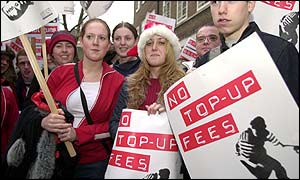 Students say top-ups would lead to a two-tier system Thousands of students from across the UK have marched through London in protest against any plans to increase tuition fees. They warned that an increase in fees would deter poorer students from going to university.
Speaking later in the Commons, Prime Minister Tony Blair said parents would not have to pay thousands of pounds "upfront" for their children's education. But he repeatedly refused to rule out the idea of extra charges to ease the burden on cash-strapped universities. The government is said to be considering increased tuition fees (known as top-up fees) and a graduate tax, or a combination of schemes to try to boost funds.
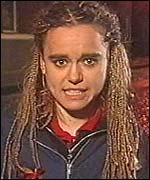
It is thought between 5,000 and 10,000 students joined Wednesday's protest. Student Hannah Chamock was among the crowd. She says top-up fees could prevent many people going to university, and "completely contradict" government plans to get more youngsters into higher education.
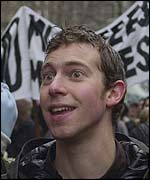
He also believes top-up fees could deter students from poorer families. "What we've seen in the four years since the introduction of tuition fees is a rise in student debt to �12,000 over the course of a degree and a subsequent 9.5% fall in applications from lower socio-economic groups," he said. At Question Time in the Commons, the Prime Minister said universities needed more money and the status quo was not an option. "We do need to get more money into our university education system," he said. "It can either come from the taxpayer, it can come from the parent or the student. "So, it is a difficult problem. We are resolving it and we will publish the conclusions in January." Mr Blair said changes outlined in the review would increase access to universities. "It will not mean parents are having to pay upfront thousands in fees," he said.
It is thought Tony Blair is under pressure to abandon the idea of top-up fees because of the danger of a cabinet split and because of warnings that they could become Labour's poll-tax. In a briefing to journalists shortly before the march, Downing Street officials said there were 'no easy politically palatable options' for the future funding of universities - and that the government would have to 'grasp the nettle' and make 'tough decisions'. Currently, only half of students pay tuition fees of �1,100 a year because the fees are means-tested. The government review follows claims by universities that they need billions more each year to improve standards and compete globally.
Top-up fees would allow top universities to charge above the current �1,100 capped rate. Imperial College London has already passed plans to charge students up to �10,500 if the cap is lifted. Students are already graduating with average debts of about �12,000, but the government says graduates earn �400,000 more than non-graduates during their working life. Scottish system Although the proposals will have no direct impact on universities in Scotland, the Scotland Secretary, Helen Liddell, has publicly voiced opposition to the move. Students from Scotland would have to pay the fees if they chose to study in England.
"It doesn't take into account people that want to go and work in the public sector, or take a career break to have a family for example. "Even for those students who do end up earning those high wages, students are going to end up paying over �90,000 in income tax over their lifetime anyway, which more than covers the cost of a degree." The Association of University Teachers (AUT) says everyone involved in higher education is against top-up fees. The union's Matt Waddup said: "This would create a two-tier system, where the haves would go to elite Ivy League institutions and the have-nots would have to make do with second best. | |
See also:  04 Dec 02 | Politics Internet links: The BBC is not responsible for the content of external internet sites Top Education stories now: Links to more Education stories are at the foot of the page. | ||||||||||||||||||||||||||||||||||||||||||||||||||||||||||||||||||||||||||||||||||||||||||||||||||||||||||||||||||||||||||||||||||||||||||||||||||||||||||||||||||||||
| |
|  E-mail this story to a friend E-mail this story to a friend |
| |
| Links to more Education stories |
| | | ||
 | ||||
 | | Back to top
| ||
| ---------------------------------------------------------------------------------- To BBC Sport>> | To BBC Weather>> | To BBC World Service>> ---------------------------------------------------------------------------------- © MMIII | News Sources | Privacy |