|
 |
 | | | | | | ||||||||||||||||||||||||||||||||||||||||||||||||||||||||||||||||||||||||||||||||||||||||||||||||||||||||||||||||||||||||||||||||||||||||||||||||||||
| | | You are in: UK: Education | ||||||||||||||||||||||||||||||||||||||||||||||||||||||||||||||||||||||||||||||||||||||||||||||||||||||||||||||||||||||||||||||||||||||||||||||||||||||
|
| | Monday, 7 October, 2002, 17:17 GMT 18:17 UK 'Recycled' education policies 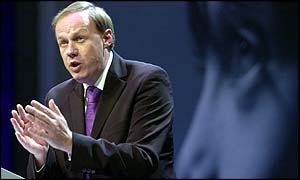 Mr Green talked of "state scholarships" "Six new policies - not bad in 10 minutes" - the shadow education secretary's tongue-in-cheek boast. But how new, and how detailed, were Damian Green's new policies?
Perhaps we should not expect too much. After all, the annual party conferences are venues for rhetoric rather than action. Old Labour Last week at the Labour Party conference the prime minister talked about modernising comprehensives. It was trailed by the "spin doctors" as a policy departure. In fact, Blair had made more or less the same speech at least five times before. Indeed he first started to call for comprehensives to be "modernised" while he was still in Opposition. So we should not be too surprised that most of the education policies launched at the Conservative Party conference today are also recycled ideas. Done that Giving head teachers more freedom to decide how to run their schools and spend their budgets is hardly a new idea.
It was taken further by the Labour government. And it was part of the "Free Schools" idea which was at the heart of the Conservatives' education ideas in the last election manifesto. Other ideas - such as scrapping appeals panels and requiring home-school behaviour contracts to be a condition of school admissions - have also been well aired before today. A-level upheaval? Two more ideas - scrapping AS-levels and replacing the Qualifications and Curriculum Authority with a new independent body - both seem more like snap responses to the recent A-level problems than long-term policy. Certainly we are given no detail of what will replace AS-levels. If the Conservatives simply plan to go back to the old A-level system, then why not say so? They are wise to be cautious: it's one thing to say scrap AS-levels now, but by the next election they may have finally bedded down. By then, will anyone want more upheaval? This, of course, is the difficulty of being in Opposition. The target keeps moving. Vouchers - not The only answer is to leap-frog government initiatives to ensure you are well ahead of their current thinking. The idea of a "voucher" scheme would certainly be radical and well ahead of Labour's thinking on parental choice.
This would be a risky option. Vouchers were first talked about over 20 years ago when Sir Keith Joseph was Mrs Thatcher's education secretary. He was never able to come up with a workable scheme. The chaos of the nursery voucher scheme in the dying days of the last Tory government is not auspicious either. But Damian Green is too wise to rush into promises of a voucher scheme which could prove a hostage to fortune. Despite the advance suggestions, the word "vouchers" did not cross Mr Green's lips. Spot the difference Instead he talked only of "State Scholarships" which he promised would be introduced initially in deprived areas. They would allow parents and other groups to set up new schools which would be funded by the state but run by independent bodies. This does not sound so different from Labour's City Academies, which are sponsored by charitable groups or businesses, who pay the start-up costs. These too have their running costs funded by the state. Indeed, it is already possible for independent groups - such as parents or religious groups - to start schools and then apply for state funding as foundation schools. This was how the first state-funded Muslim schools began. Parental appeal What is new about the Conservative idea is that parents would be given start-up money for these new schools. This might be money to build a new school but more likely would cover the cost of converting existing buildings. The Conservatives also hope to make the scheme much bigger than the City Academy idea which, so far, has produced only three new schools with another nine in the pipeline. The idea may well appeal to parents who are unhappy with local school provision. Local councils will, no doubt, argue it will make it difficult for them to deal with wasteful surplus places. The model is Scandinavian. Both Sweden and Denmark have successfully pioneered independent, state-funded schools, responding to parental demand. According to Mr Green, 40% of the schools in Copenhagen are of this type, with most of them created in the past 15 years. He is hoping a Conservative government can achieve a similar transformation here. | |
See also:  27 Apr 01 | Education 04 Oct 02 | Education 28 Jan 02 | Education 06 Oct 02 | Politics Internet links: The BBC is not responsible for the content of external internet sites Top Education stories now: Links to more Education stories are at the foot of the page. | ||||||||||||||||||||||||||||||||||||||||||||||||||||||||||||||||||||||||||||||||||||||||||||||||||||||||||||||||||||||||||||||||||||||||||||||||||||
| |
|  E-mail this story to a friend E-mail this story to a friend |
| |
| Links to more Education stories |
| | | ||
 | ||||
 | | Back to top
| ||
| ---------------------------------------------------------------------------------- To BBC Sport>> | To BBC Weather>> | To BBC World Service>> ---------------------------------------------------------------------------------- © MMIII | News Sources | Privacy |