
|
 |
 | | | | | | ||||||||||||||||||||||||||||||||||||||||||||||||||||||||||||||||||||||||||||||||||||||||
| | | You are in: UK: Education | ||||||||||||||||||||||||||||||||||||||||||||||||||||||||||||||||||||||||||||||||||||||||||
|
| | Monday, 7 October, 2002, 16:08 GMT 17:08 UK Universities defend state school quotas 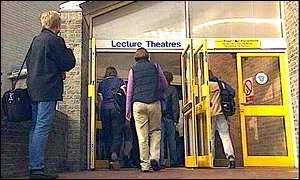 Critics say private school pupils suffer discrimination Universities hit back at reports they are discriminating against independent schools by actively increasing their intake of state school pupils. Many of Britain's leading universities have introduced specific numerical targets for state school students and, with plans for little or no expansion in student numbers, this means fewer places for fee-paying students.
They say they are also keeping in line with government policy, which sets benchmark percentages of how many state school students a given institution should take on. Ministers also want to see 50% of those under the age of 30 in higher education by 2010. 'Crude' Professor of education at Liverpool University, Alan Smithers, dismissed quotas, saying admission to university should be based simply on demonstrated performance. "To go for crude rebalancing at this level will create more unfairness than already exists," said Professor Smithers.
"And is it just state schools we should be concerned about? Boys don't do as well as girls, so should we introduce quotas for them?" But many UK universities are still setting themselves targets for admitting state school pupils. The London School of Economics stresses that it does not have quotas, but hopes to raise its state school intake from "around 65%" as it currently stands to 74%, a benchmark figure recommended by the government. "LSE's continued approach is encourage applications from students, whatever their background, school, or location, and these are all considered on the basis of academic excellence and individual merit," a spokeswoman said. "We aim to widen student access to all our programmes, while maintaining excellent academic standards and student mix." At Leeds University, the percentage of state school entrants currently stands at 77%, but by the academic year 2004/05, the university aims to raise that to 80%. Links with state schools The university aims to achieve this by forging links with local state schools and trying to raise pupils' aspirations towards higher education. Potential students may also be offered places on the basis of slightly lower grades than usual. But, in return, students have to take an extra module at the university before starting degree studies. "So they still have to prove themselves, it's just another way of measuring potential," said Ceri Nursaw, head of widening participation at Leeds. "We recognise that we've got to have a diverse institution, so that is one of the reasons we're aiming for 80% from state schools," said Ms Nursaw. "There is no discrimination at all. "Private school pupils are often well marketed by their schools and the extra work we're doing with state schools is simply to balance up the information we have on students." The row comes a week after the Headmasters' and Headmistresses' Conference claimed seven top UK universities were at least one department is suspected of discriminating against students from fee-paying schools. | | See also:  30 Sep 02 | Education 12 Apr 02 | Education 24 Jul 00 | Education 19 Jun 00 | Education 05 Oct 00 | Education Internet links: The BBC is not responsible for the content of external internet sites Top Education stories now: Links to more Education stories are at the foot of the page. | ||||||||||||||||||||||||||||||||||||||||||||||||||||||||||||||||||||||||||||||||||||||||
| |
|  E-mail this story to a friend E-mail this story to a friend |
| |
| Links to more Education stories |
| | | ||
 | ||||
 | | Back to top
| ||
| ---------------------------------------------------------------------------------- To BBC Sport>> | To BBC Weather>> | To BBC World Service>> ---------------------------------------------------------------------------------- © MMIII | News Sources | Privacy |





