|
 |
 | | | | | | ||||||||||||||||||||||||||||||||||||||||||||||||||||||||||||||||||||||||||||||||||||||||||||||||||||||||||||||||||||||||||||
| | | You are in: UK: Education | ||||||||||||||||||||||||||||||||||||||||||||||||||||||||||||||||||||||||||||||||||||||||||||||||||||||||||||||||||||||||||||||
|
| | Monday, 2 September, 2002, 11:58 GMT 12:58 UK 'Errors' in school checks 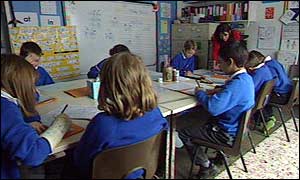 All classroom staff have to be checked The government agency which carries out the character checks on people seeking work with children says its job is being slowed by thousands of incorrect or incomplete application forms. The Criminal Records Bureau (CRB) is under fire for delays in processing applications from new classroom staff. It says applicants' forms often have mistakes. But in one case it gave a man top-level clearance, even though his gender was given as "female". The CRB had promised to get the most urgent cases dealt with by this Wednesday, when a majority of schools in England and Wales start the new term. But it has now admitted it will not get them all done. A Home Office spokesperson said that, by Monday, about 6,000 applications contained "errors or omissions" and the CRB was having to request additional information before processing could begin. 'High standards' At the Local Government Association, which represents education authorities who are the employers for most teachers, there is anger that the logjam should ever have been allowed to build up. Its head of education policy, Neil Fletcher, said education authority personnel officers felt "let down very badly" by the CRB, which had apparently failed to appreciate the likely demand for its services over the summer months. He said the requests for clarification or more information on people's applications reflected the "highest possible standards of identity checking" which the CRB had to pursue. But questions are being asked about how thorough the checks are. Wrong gender Lee Gregory contacted BBC News Online to say her 18-year-old son, Christopher, had supposedly been given the highest level of clearance, known as "enhanced disclosure" - but on his disclosure form his gender is given as "female". Lee and her husband work for the Chernobyl Children Life Line charity, which gives month-long breaks in Britain for victims of the Chernobyl nuclear disaster. At their home in Wokingham, Berkshire, they were playing host this summer to two boys from Belarus, aged 10 and 11. So they and their daughter and son all sought CRB clearance in keeping with the charity's policy. By accident, she said, her husband ticked the "female" box on Christopher's application form. 'Shirty letter' "I suspect they scan them rather than reading them, because anyone with an atom of sense reading it should have telephoned us to check," she said. Instead the application was processed - and somehow cleared Christopher Martin Gregory (female). "I phoned up and they said they would look into it. We got a shirty letter back saying we had filled in the wrong box." While it is trivial in itself, Mrs Gregory says it has dented the charity's confidence in the system. "I thought they were supposed to be checking that the person exists and that they have no criminal record," she said. Need for vigilance "Our local charity has been warning people not to trust the forms, because of this. "People should still be vigilant," she added. Concerns persist, too, about the accuracy of the Phoenix database used by the Police National Computer, which the CRB checks for information on criminal records and police cautions. Warnings were sounded last year by the Commons Home Affairs Committee and the Information Commissioner. The Information Commissioner, Elizabeth France, said in her annual report in 2001: "Problems with the accuracy and timeliness of records have been identified in two independent reports." Ongoing worries The establishment of the CRB made the situation "critical", she said. Police chiefs took steps to try to improve the situation. But this week one of the assistant information commissioners, David Smith, told BBC News Online: "It's something that we are keeping under review. "The situation varies from force to force and there is still some way to go." One of the ways the CRB sought to speed up its work was by farming out the data processing - entering the information supplied on paper application forms into its computer database. Processed in India A Home Office minister, Hilary Benn, told MPs in June that most of the backlog was being handled by the Hays data entry facility of Chennai, Madras, India. "The concept of processing data overseas is not a new one and has been carried out successfully for a number of years," he said. "The security of criminal records checking should in no way be jeopardised by the outsourcing of the data capture process. "A comprehensive security audit has been carried out on the staff, premises and processes involved," he said. The Home Office stresses that it is only data processing - not the criminal records checks - that are done abroad. | |
Internet links:  The BBC is not responsible for the content of external internet sites Top Education stories now: Links to more Education stories are at the foot of the page. | ||||||||||||||||||||||||||||||||||||||||||||||||||||||||||||||||||||||||||||||||||||||||||||||||||||||||||||||||||||||||||||
| |
|  E-mail this story to a friend E-mail this story to a friend |
| |
| Links to more Education stories |
| | | ||
 | ||||
 | | Back to top
| ||
| ---------------------------------------------------------------------------------- To BBC Sport>> | To BBC Weather>> | To BBC World Service>> ---------------------------------------------------------------------------------- © MMIII | News Sources | Privacy |