|
 |
 | | | | | | ||||||||||||||||||||||||||||||||||||||||||||||||||||||||||||||||||||||||||||||||||||||||||||||||||||||||||||||||||||||
| | | You are in: UK | ||||||||||||||||||||||||||||||||||||||||||||||||||||||||||||||||||||||||||||||||||||||||||||||||||||||||||||||||||||||||
|
| | Thursday, 9 January, 2003, 10:07 GMT 'There's a near miss every trip'  Roger Francis (centre) pilots ships through the Channel After the Tricolor sank in the English Channel, it seemed inconceivable that two more ships could plough into the wreck. Here, Captain Roger Francis tells of piloting tankers through the crowded waterway.
In the years that I've been negotiating the Dover Straits, the standard of watch-keeping has plummeted. On a run I did last month, I witnessed three near collisions because watch-keepers failed to keep a look out. It's the old business of the shipping companies trying to keep costs down when crewing the ships. That astonishes me - they run ships worth �25m each, yet crew them with the cheapest people they can get. So our biggest problem is keeping out of the way of the idiots.
I work 15 days in a month, normally boarding a ship at Brixham, in south Devon, or Cherbourg and guiding it through the straits. Sometimes I'm helicoptered out to the ship, where it either lands on the deck or I go down a wire - not my favourite thing at all, my whole world goes before me in the 40 to 50 feet I'm going down - or I get a boat out and clamber up a ladder.
A lot of the job is done by sight and radar, but in the past six months pilots have started using electronic navigation. I go on board with a laptop and stick up a GPS antenna outside the wheelhouse. I know where I am all the time, but it's handy to have that back-up to check. Near misses are very common - I see at least one each trip. Ships either can't be bothered to hold their course - it might make their trip a little bit longer - or they expect others to get out of the way.
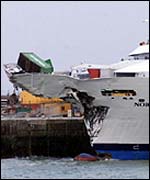
The Tricolor collisions came as no surprise to me; I've been expecting something like it for ages. Any ship in the Channel should know where that wreck is. There's a navigational telex system that's mandatory on every ship that's been pumping out messages with the location of the ship, that there are buoys and a guard ship around it, to keep to the south of it. Nonetheless, I think it highly likely that another ship will hit it. The Tricolor is probably going to be there for at least six months, and she's probably well buried in the seabed by now. | |
See also:  02 Jan 03 | UK 02 Jan 03 | UK 24 Aug 99 | UK Internet links: The BBC is not responsible for the content of external internet sites Top UK stories now: Links to more UK stories are at the foot of the page. | ||||||||||||||||||||||||||||||||||||||||||||||||||||||||||||||||||||||||||||||||||||||||||||||||||||||||||||||||||||||
 | |
|  E-mail this story to a friend E-mail this story to a friend |
| |
| Links to more UK stories |
| | | ||
 | ||||
 | | Back to top
| ||
| ---------------------------------------------------------------------------------- To BBC Sport>> | To BBC Weather>> | To BBC World Service>> ---------------------------------------------------------------------------------- © MMIII | News Sources | Privacy |




 It's a bit like driving a car except we have to keep to the right. The shipping lanes run north to south and the ferries nip across at right angles.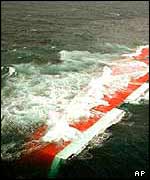


 The Tricolor collisions came as no surprise to me