|
 |
 | | | | | | ||||||||||||||||||||||||||||||||||||||||||||||||||||||||||||||||||||||||||||||||||||||||||||||||||||||||||||||||||||||||||||||||||||||||||||||||||||||||||||||||||||||||||||
| | | You are in: UK | ||||||||||||||||||||||||||||||||||||||||||||||||||||||||||||||||||||||||||||||||||||||||||||||||||||||||||||||||||||||||||||||||||||||||||||||||||||||||||||||||||||||||||||||
|
| | Monday, 20 January, 2003, 11:11 GMT Expat e-mail: Nigeria  Many Britons dream of giving up the rat race and volunteering abroad. This is what Justin Scully has done, as he tells in our series featuring expatriate readers of BBC News Online.
I decided to volunteer because after 10 years working in and benefiting from the "system", I wanted to give something back.
I've come across no anti-Western feeling except T-shirts with "Osama bin Laden - My Hero". I feel safer in Nigeria - its unique internal problems aside - than I would in the UK. Nigeria might do many odd things, but it's never going to bomb Iraq to get oil. After 11 months here, the hardships and joys will stay with me forever: sharing a taxi with six people, two children, a basket of chickens and a goat; the immense delight when a parcel of chocolate gets through from the UK; picking mangos straight from the tree; the stranger who takes my hand, asks my name and bids me welcome. 'I've been shot at' Nigeria is a country that has a very poor image in the West; I find it diverse, vibrant, fascinating - and frightening. Security can be an issue, as shown by the furore over the Miss World contest.
Corruption is endemic and political; religious and ethnic tensions are not far below the surface in a country where immense wealth and extreme poverty are everyday sights. Basic facilities are erratic at best: electricity is provided by NEPA, which I am assured stands for No Electric Power Always. I'm regularly without power for five hours a day, but I've learnt to cook and shave by candlelight.
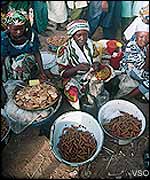
I have no TV (even if I had one there is only one channel, and back to the electricity problem), no cinema, no theatre, no phone, no cheese, no fresh milk, no wine and, worst of all, no chocolate. But after you get used to all these deprivations - and you very quickly do - it's the immense kindness, humour and generosity that keeps you going a long way from home. Instant celebrity To begin with, rural Nigeria outside the oil producing areas sees very few Europeans. On my initial trips to market I felt like the Pied Piper leading a crowd of small children all chanting "oyibo pepe". Oyibo means white man; pepe is pepper, for the strange colour white people go in the sun.
That a European would come to Nigeria and live in a village rather than an air-conditioned compound has endeared me to the community. The fact that I earn about $100 a month - much more than a teacher or policeman - has been greeted with incomprehension. And being an ex-pat has given me a new perspective on my home country. A Nigerian who comes to the UK will certainly have access to electricity, running water, education and healthcare - which only the rich have access to in Nigeria - but would they enjoy the overwhelming welcome I've received here? Send us your comments on this story, using the form below. Every week we bring you the story of a Briton who has moved abroad. Do you live far from home? Tell us your experiences, also using the form below. Justin's report is a refreshing addition to the daily news of threats of war and misery. I was a Canadian volunteer -1974 to 1978 - in northern Ghana working with a wonderful VSO nurse who treated my malaria and my soul. That rewarding experience forged lasting friendships with other volunteers and nationals. I tried to apply for VSO some years back but it appears that most vacancies require at least a degree, even admin. I am an IT trainer - have been for many years - and would love to pass on my skills. But because of the elitist nature of VSO, I am unable to do so. No wonder recruitment has taken a dive. Geoff, they do take non-graduates now, you just need two years experience in a required skill area. I got back last June after 2 years in Kenya. I too felt a lot safer living in a rural village with everyone for 40km around looking out for me than I do back here in the UK where I don't even know my next door neighbours. Geoff if you want to use your IT skills in a volunteer role, contact Geekcorps, a US based organisation specifically for the provision of IT volunteers in developing countries. They're very active in Ghana where I have been working until recently. But be prepared - VSO life is not for everyone - tough but rewarding and for most life changing. Glenn Jones, UKMy charity works in education in Kenya. We collect computers to send to Africa, and volunteers for schools and a centre for street children. A volunteer can go for as long as they like, and don't need a degree, just enthusiasm, comittment and a sense of humour. Also, if you have redundant working computer equipment, please get in touch. Julie Martin, Poole, Dorset I was a VSO in Malawi teaching and setting up a repair program for technical training equipment 7 years ago. I have never been so affected by anything and often think about the country, the people, and what it was like to be there. And Geoff, I and many of the people who travelled out with me had not been to university but had real practical skills to offer. I volunteered to go to Uganda in 1994. Due to a chain of unfortunate events I only stayed 6 months. I experienced all the usual "hardships" - no water, limited power, corruption, civil unrest, threat of robbery - but I wouldn't have missed for the world. We need to be grateful for our cushioned lives and appreciate the very existence of our European infrastructure that allows us to move freely, eat well and work for a decent living wage. I worked in Nepal for 15 months in conditions similar to Justin's. It's a win-win situation - the kindness, warmth & gratitude are more rewarding than having a well-paid job here. As for security, newspapers often over-emphasise the bad - bear in mind that a foreigner reading about our ricin plots, gang shootings & drug culture would probably get a very misguided image of everyday British life. I spent 2 years in Nepal with VSO and it was an experience of a lifetime. For those who don't feel able to take the plunge, there are plenty of openings for voluntary work in communities at home. I spent a precious year in Jamaica on VSO in 1971/2, teaching in an industrial training centre. I wrote to my class of 20 last year - and got four replies (pretty good after 30 years), including one from New York. Boy, was I encouraged to hear from those who had continued in engineering, and whose own sons had followed on too. I worked for 3 years in Eritrea. Loved it, wouldn't change a thing. No facilities means you enjoy what you have even more, something many people in the West need to learn. I even got evacuated after Eritrea and Ethiopia went to war. Have the airport bombed while you're about 3 miles away is a surreal experience. VSO do cope and do care. I lived for two years in Hwimo, Nigeria from February 98 to Feb 2000. Actually today I am flying to Abuja, and will visit my friends in this village again. My time with VSO was fab, and I am just back from Brazil where I worked with indigenous peoples. I am very impressed with Justin's unbiased view of life in rural Nigeria, although I must point that you do not need to be rich to access education. I emigrated to the UK 13 years ago and was pleasantly surprised to find I was one of the most academically qualified nurses in my Kent hospital. There've been a few awkward moments like when I offered a glass of water to a new patient. I couldn't understand why she looked shocked until she smiled and said she didn't expect my palms to be "white"! An ex-girlfriend spent more than two years in Guyana with VSO. She was threatened with a gun, conned out of money by a local who had befriended her, and contracted a long-term, debilitating illness. The fact that the local organisation she worked with seemed ill-equipped and/or unwilling to absorb her scientific work rubbed salt into the wound. Every e-mail sent will be read, and we will get in touch if we need more details. | |
See also:  18 Jan 03 | UK 20 Feb 03 | Country profiles 24 Nov 02 | Africa Internet links: The BBC is not responsible for the content of external internet sites Top UK stories now: Links to more UK stories are at the foot of the page. | ||||||||||||||||||||||||||||||||||||||||||||||||||||||||||||||||||||||||||||||||||||||||||||||||||||||||||||||||||||||||||||||||||||||||||||||||||||||||||||||||||||||||||||
 | |
|  E-mail this story to a friend E-mail this story to a friend |
| |
| Links to more UK stories |
| | | ||
 | ||||
 | | Back to top
| ||
| ---------------------------------------------------------------------------------- To BBC Sport>> | To BBC Weather>> | To BBC World Service>> ---------------------------------------------------------------------------------- © MMIII | News Sources | Privacy |




 I came out to Nigeria last February on a two-year placement with VSO, having left my job managing pubs and restaurants for Scottish and Newcastle.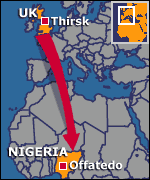
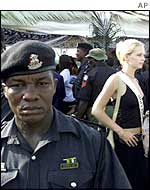
 I earn $100 a month - much more than a teacher or policeman