|
 |
 | | | | | | ||||||||||||||||||||||||||||||||||||||||||||||||||||||||||||||||||||||||||||||||||||||||||||||||||||||||||||||||||||||||||||||||||||||
| | | You are in: UK | ||||||||||||||||||||||||||||||||||||||||||||||||||||||||||||||||||||||||||||||||||||||||||||||||||||||||||||||||||||||||||||||||||||||||
|
| | Wednesday, 20 November, 2002, 16:58 GMT Fire strike talks stall 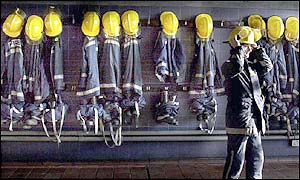 Friday's strike is looking increasingly likely There will be no talks between firefighters' unions and employers on Wednesday as the eight-day long strike due to start on Friday looked increasingly likely. The executive of the Fire Brigades Union (FBU) decided the employers had not come up with a significantly different offer and declined to meet them. The employers said they would work through the night to try to improve the package on the table so talks could resume on Thursday, but warned there would be no more money available.
FBU leader Andy Gilchrist said: "We have always been prepared to look at a serious and significant offer on pay but we have not had one. "Because we need to resolve this, we are prepared to meet again tomorrow and see what they have got to offer us." John Ransford, one of the employers' negotiators, made it clear there was no new money available to offer the firefighters but said the employers were "re-jigging" their offer. The union has been campaigning for a 40% pay rise and last week rejected an offer of 11.3% over two years. Troop problem The threat of the eight-day strike has raised concerns from the Chief of Defence Staff Sir Michael Boyce who says another strike would damage military effectiveness and the morale and motivation of troops who could be needed in Iraq. He also said troops should not cross picket lines in order to use modern red fire engines, as suggested by the government.
The union's general secretary met Deputy Prime Minister John Prescott as part of the ongoing negotiations aimed at averting further industrial action. He said the government was doing all it could to stop Friday's strike going ahead. But a row appears to be brewing between the government and local authority employers over who should fund a pay increase for firefighters. Funding concerns There is still a huge gap between the union's 40% original pay claim - to take average pay to �30,000 - and the latest offer recommended by the Bain report worth 11.3% over two years, rejected by the FBU. During Prime Minister's Questions on Wednesday, Tony Blair told the House of Commons: "Outside of the existing formula, there can only be greater pay for firefighters if it's paid for by the modernisation proposals, those proposals set out in the Bain review." The BBC's Labour Affairs Correspondent Stephen Cape said employers had "serious concerns" about how any pay increase above 4% would be funded. Mr Prescott told MPs above-inflation pay rises must be linked to modernisation. Firefighters held a 48-hour strike last week, with 1950s Green Goddesses covering for the country's fleet of hi-tech engines. | |
See also:  20 Nov 02 | England 18 Nov 02 | Politics 15 Nov 02 | Politics Internet links: The BBC is not responsible for the content of external internet sites Top UK stories now: Links to more UK stories are at the foot of the page. | ||||||||||||||||||||||||||||||||||||||||||||||||||||||||||||||||||||||||||||||||||||||||||||||||||||||||||||||||||||||||||||||||||||||
| |
|  E-mail this story to a friend E-mail this story to a friend |
| |
| Links to more UK stories |
| | | ||
 | ||||
 | | Back to top
| ||
| ---------------------------------------------------------------------------------- To BBC Sport>> | To BBC Weather>> | To BBC World Service>> ---------------------------------------------------------------------------------- © MMIII | News Sources | Privacy |