
|
 |
 | | | | | | ||||||||||||||||||||||||||||||||||||||||||||||||||||||||||||||||||||||||||||||||||||||||||||||||||||||||||||||||||||||
| | | You are in: UK | ||||||||||||||||||||||||||||||||||||||||||||||||||||||||||||||||||||||||||||||||||||||||||||||||||||||||||||||||||||||||
|
| | Monday, 28 October, 2002, 02:32 GMT Speed cameras face legal challenge 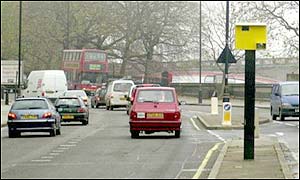 Motorists are wising up to brightly coloured cameras Transport campaigners are to apply for a judicial review into government rules forcing speed cameras to be painted bright yellow. Pressure group Transport 2000 says there is no scientific evidence that brightly coloured cameras are more likely to make drivers slow down.
It is pursuing the court review along with the Slower Speeds Initiative. Both groups believe many drivers brake when they catch a glimpse of a yellow box on the road ahead, making life dangerous for drivers behind. Vicky Cann, assistant director of Transport 2000, said the High Court would be considering whether to look at the case. She said the government had been backed into a corner by the motoring lobby over speed cameras. Ms Cann said: "In no other area of criminal enforcement do criminals get warned they might be prosecuted, so why are speeding motorists any different? "The danger of these guidelines is that speeding motorists will brake before a yellow camera and then speed away after it, knowing they are 'safe' from prosecution." Road deaths Earlier this year, the powerful Commons transport select committee, described the rules as "unreasonable". "Crashes do not just occur at accident blackspots," said the committee's report. "There was no scientific research to support this decision. People will die as a result." In 2000, 3,400 people were killed on the UK's roads but MPs say that number could be reduced to less than 1,000 with the right measures. The government believes making cameras more visible will make drivers slow down earlier. Official statistics already suggest there has been a 47% fall in the number of deaths and serious injuries at speed camera sites. The Department of Transport is attempting to hit a target of cutting the number of people killed or seriously injured by 40% by 2010. | |
See also:  03 Dec 01 | UK 13 Aug 01 | UK 26 May 02 | Politics 30 Jan 02 | Politics 01 Oct 01 | Wales Internet links: The BBC is not responsible for the content of external internet sites Top UK stories now: Links to more UK stories are at the foot of the page. | ||||||||||||||||||||||||||||||||||||||||||||||||||||||||||||||||||||||||||||||||||||||||||||||||||||||||||||||||||||||
| |
|  E-mail this story to a friend E-mail this story to a friend |
| |
| Links to more UK stories |
| | | ||
 | ||||
 | | Back to top
| ||
| ---------------------------------------------------------------------------------- To BBC Sport>> | To BBC Weather>> | To BBC World Service>> ---------------------------------------------------------------------------------- © MMIII | News Sources | Privacy |






