|
 |
 | | | | | | |||||||||||||||||||||||||||||||||||||||||||||||||||||||||||||||||||||||||||||||||||||||||||||||||||||||||||||||||||||||||||||||||||||||||||||||||||||||
| | | You are in: UK | |||||||||||||||||||||||||||||||||||||||||||||||||||||||||||||||||||||||||||||||||||||||||||||||||||||||||||||||||||||||||||||||||||||||||||||||||||||||||
|
| | Friday, 20 September, 2002, 07:21 GMT 08:21 UK Hunters united - for now 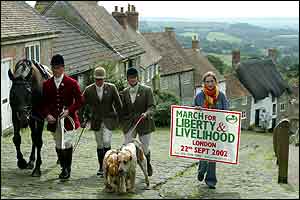 Off to the march: Persistent rural problems defy cure
 Only the prospect of an end to their sport has fired up so many country people. They are entirely right to fear their way of life is threatened as never before. But the proposed hunting ban is the least of their worries, though the most symbolic. Many marchers insist they are protesting against a range of measures and policies they believe are ruining the countryside. They are angry at ministers' handling of the mad cow (BSE) and foot-and-mouth crises. They loathe the European Union's common agricultural policy, blaming it for declining farm incomes. Not understood The farmers accuse UK supermarket chains of profiteering from their work. There is huge resentment at the attrition of rural services - schools, hospitals, buses and trains, post offices, banks and even churches.
And there is a conviction that the present government is a creature of the cities, neither knowing nor caring much about what happens outside them. Almost two years ago the government's rural white paper said all departments would take account of rural needs when making policy. England's Countryside Agency (CA), asked to monitor this "rural proofing", said 18 months later government policymakers were still not "thinking rural".
But there is no single cause that could bring them all onto the streets except hunting, no totem to unite them all except the fox and its companions in the chase, the stag and the hare. No magic wand So imagine for a moment that - somehow - the hunting row had been settled amicably. There would be no more mass protests pitting country against town. There would be no banner beneath which everyone could unite.
Three days before the march, on 19 September, the National Farmers' Union urged the government to bring down the value of sterling against the euro. It said: "The industry's vulnerability to currency fluctuations has been a significant factor in depressed farm incomes". Whether hunting stays or goes will not make a scrap of difference to the sterling-euro exchange rate. Illusory target The hunters claim a ban on their sport would destroy thousands of jobs, a claim rejected by their opponents. Whoever is right, the steady haemorrhaging of the countryside's vitality and distinctiveness is set to continue whatever the fate of the hounds' quarry. The CA chairman, Ewen Cameron, said last May: "The countryside could become the preserve of the wealthy, threatening the whole nature of rural communities and viability of services." Hunting, once described as "the unspeakable in pursuit of the inedible", has become a politically-charged distraction from reality. British hunters kill about 20,000 foxes a year. Whether the hounds get them or they survive to die beneath the wheels of a car, there are far more urgent rural problems to summon us to the barricades. | |
See also:  19 Jul 02 | Politics 15 Jul 02 | Politics 11 Apr 02 | UK 29 Jan 02 | Science/Nature Internet links: The BBC is not responsible for the content of external internet sites Top UK stories now: Links to more UK stories are at the foot of the page. | |||||||||||||||||||||||||||||||||||||||||||||||||||||||||||||||||||||||||||||||||||||||||||||||||||||||||||||||||||||||||||||||||||||||||||||||||||||||
| |
|  E-mail this story to a friend E-mail this story to a friend |
| |
| Links to more UK stories |
| | | ||
 | ||||
 | | Back to top
| ||
| ---------------------------------------------------------------------------------- To BBC Sport>> | To BBC Weather>> | To BBC World Service>> ---------------------------------------------------------------------------------- © MMIII | News Sources | Privacy |