|
 |
 | | | | | | ||||||||||||||||||||||||||||||||||||||||||||||||||||||||||||||||||||||||||||||||||||||||||||||||||||||||||||||||||||||||||||||||||||||||||||||||||||||||||||||||||||||||||||||||||||||||||||||||||||||||||||||||
| | | You are in: South Asia | ||||||||||||||||||||||||||||||||||||||||||||||||||||||||||||||||||||||||||||||||||||||||||||||||||||||||||||||||||||||||||||||||||||||||||||||||||||||||||||||||||||||||||||||||||||||||||||||||||||||||||||||||||
|
| | Monday, 11 November, 2002, 16:40 GMT Nepal gripped by strike 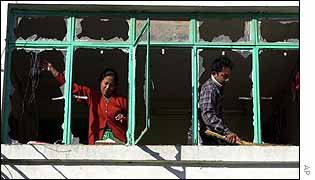 The rebels preceded the strike with a wave of attacks
The Maoists have been fighting for the overthrow of Nepal's constitutional monarchy for nearly seven years. Soldiers and police are patrolling the streets of the capital and other towns, but that is about the only activity taking place. With schools and almost all businesses and offices shut, the country has come to a complete standstill. On a few building sites, labourers were still at work but they were the exception to the rule. The Maoists enforced their strike call in recent days with a wave of bombings and attacks. In the Kathmandu area, several government offices were damaged and three women were injured early on Saturday morning when a bomb went off next to a Buddhist temple. Across the country, other attacks blamed on the rebels claimed at least four lives. 'Business as usual' The government insists that it will continue to function but few civil servants have come to their offices. A regular Monday cabinet meeting was scheduled and newspaper reports said the main item on the agenda would be how best to coax the rebels into a peace process. That is what most Nepalis want. Nearly seven years of violence have left more than 7,000 people dead, according to the Royal Nepalese Army. The rebels control or have free rein over many rural areas and can increasingly strike at will inside Kathmandu. The army was only deployed against the insurgents a year ago and, despite some battlefield defeats, hardened Maoist fighters continue to use terrain and terror to their advantage. While an outright military victory by either side is unlikely, the continuing violence is frightening away tourists and foreign investment. Unless peace talks take place soon, the sense of crisis and despair will only deepen. | |
See also:  08 Nov 02 | South Asia 28 Oct 02 | South Asia 19 Oct 02 | South Asia 25 Sep 02 | South Asia Internet links: The BBC is not responsible for the content of external internet sites Top South Asia stories now: Links to more South Asia stories are at the foot of the page. | ||||||||||||||||||||||||||||||||||||||||||||||||||||||||||||||||||||||||||||||||||||||||||||||||||||||||||||||||||||||||||||||||||||||||||||||||||||||||||||||||||||||||||||||||||||||||||||||||||||||||||||||||
| |
|  E-mail this story to a friend E-mail this story to a friend |
| |
| Links to more South Asia stories |
| | | ||
 | ||||
 | | Back to top
| ||
| ---------------------------------------------------------------------------------- To BBC Sport>> | To BBC Weather>> | To BBC World Service>> ---------------------------------------------------------------------------------- © MMIII | News Sources | Privacy |