|
 |
 | | | | | | ||||||||||||||||||||||||||||||||||||||||||||||||||||||||||||||||||||||||||||||||||||||||||||||||||||||||||||||||||||||||||||||||||||||||||||||||||||||||||||||||||||||||
| | | You are in: South Asia | ||||||||||||||||||||||||||||||||||||||||||||||||||||||||||||||||||||||||||||||||||||||||||||||||||||||||||||||||||||||||||||||||||||||||||||||||||||||||||||||||||||||||||
|
| | Sunday, 22 September, 2002, 14:21 GMT 15:21 UK Nepalese troops kill Maoist rebels 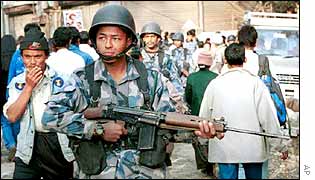 Emergency rule was declared last year The Nepalese Army says it has shot dead dozens of separatist guerrillas in a series of clashes in the mountains. Reports said at least 36 Maoist rebels had been killed in battles near their strongholds in the west of Nepal. The army action came as the rebels called a three-day strike to disrupt elections set for November.
An army spokesman, Shiv Kumar Thapa, said there were no government casualties in the recent attacks, but state-run radio reported that one soldier had been killed. As is usual practice, there has been no response to the government claims from the rebels. The official radio report said: "Seventeen rebels were killed in action with security personnel at Rolpa [in the far west] on Saturday while the rest were killed in other western parts of the country." Ceasefire offer The guerrillas' leader Pushpa Kamal Dahal - also known as Prachanda - issued a statement earlier offering a ceasefire if the government agreed to talks. He also said the call for the strike to begin on 11 November would be withdrawn if the government met rebels' demands. They want the formation of an interim government and a body to frame a new constitution. Opposition parties have urged the government to begin talks with the rebels to ensure peaceful elections. But the government has been insisting that the rebels surrender their arms as a precondition for any negotiations. An attempt at peace failed when talks between the two sides collapsed last November. Immediately afterwards, the Maoists launched a series of attacks against the army and police. Emergency rule The government responded by vowing to crush the militants. It declared a national emergency and deployed troops in areas affected by the insurgency. The emergency rule expired last month and the opposition parties are putting pressure on the government not to renew it. But the violence has been escalating. Last month, the rebels attacked two army posts, killing at least 109 soldiers. The government also claimed to have killed at least 100 rebels in those attacks. The government of Prime Minister Sher Bahadur Deuba has promised to step up security to allow peaceful elections. But observers say that will not be an easy task. | |
See also:  19 Sep 02 | South Asia 11 Sep 02 | South Asia 18 Sep 02 | South Asia 16 Sep 02 | South Asia 12 Sep 02 | Country profiles Top South Asia stories now: Links to more South Asia stories are at the foot of the page. | ||||||||||||||||||||||||||||||||||||||||||||||||||||||||||||||||||||||||||||||||||||||||||||||||||||||||||||||||||||||||||||||||||||||||||||||||||||||||||||||||||||||||
| |
|  E-mail this story to a friend E-mail this story to a friend |
| |
| Links to more South Asia stories |
| | | ||
 | ||||
 | | Back to top
| ||
| ---------------------------------------------------------------------------------- To BBC Sport>> | To BBC Weather>> | To BBC World Service>> ---------------------------------------------------------------------------------- © MMIII | News Sources | Privacy |