|
 |
 | | | | | | ||||||||||||||||||||||||||||||||||||||||||||||||||||||||||||||||||||||||||||||||||||||||||||||||||||||||||||||||||||||||||||||||||||||||||||||||||||||||||||||||||||||||||||||||||||||||||
| | | You are in: South Asia | ||||||||||||||||||||||||||||||||||||||||||||||||||||||||||||||||||||||||||||||||||||||||||||||||||||||||||||||||||||||||||||||||||||||||||||||||||||||||||||||||||||||||||||||||||||||||||||
|
| | Thursday, 19 September, 2002, 23:03 GMT 00:03 UK Sri Lanka's successful talks 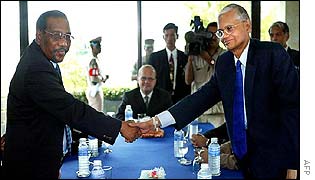 The two sides have set dates for more talks
The two parties and Norwegian diplomats mediating in the discussions ended the closing press conference sounding optimistic.
The media event which followed the talks was a friendly affair. Government chief negotiator GL Peiris and Anton Balasingham from the Tamil Tigers painted a future of constructive dialogue and reconciliation in the coming months. The first round of talks dealt with many issues, but skirted the more difficult items on the political agenda. While agreeing to continue the existing ceasefire agreement, the two sides talked about:
Aid sought Neither side showed any dramatic shift on any of their positions.
This has always been the position of the Tigers whenever they enter into a dialogue with the government. The Tamil Tigers would only ask for a separate Tamil state if they had to win it militarily. The only real change in their stance since the talks began has been about including Tamil-speaking Muslims in a future Tamil homeland. The main decision at the talks was to work jointly to raise funds to return the North and the East to normality. The parties have pledged to work together to secure aid from the international community. President's cautious welcome Thorny issues relating to the future political structure of peace were avoided in the first round of talks.
The make-up of the interim administration and decommissioning the rebels have been the main issues for the opposition Sinhala nationalists in Sri Lanka. The only indication given on this subject was by the Tamil Tigers, who said they are looking to legitimise their present administration in the north of the country. This statement is likely to upset the opposition. But even President Chandrika Kumaratunga has welcomed, albeit cautiously, the results of the first round. Optimism The challenges for the peace process lie ahead. When political matters are discussed, disagreements are likely between negotiators and on the streets of Sri Lanka. With a constitutional battle between the prime minister and the president apparently worsening by the week, it will be difficult for the government to deliver on things on which it agrees with the Tigers, without the support of the opposition. Any changes in the constitution need a two-thirds majority in parliament. The government is now working on adjustments to the constitution aimed at reducing Mrs Kumaratunga's powers. But despite all the problems and difficulties, the ceasefire has held for seven months. And there is huge optimism about peace in Sri Lanka. It would be difficult now to return to conflict after people have enjoyed the longest period of peace since the war began 20 years ago. | |
Internet links:  The BBC is not responsible for the content of external internet sites Top South Asia stories now: Links to more South Asia stories are at the foot of the page. | ||||||||||||||||||||||||||||||||||||||||||||||||||||||||||||||||||||||||||||||||||||||||||||||||||||||||||||||||||||||||||||||||||||||||||||||||||||||||||||||||||||||||||||||||||||||||||
| |
|  E-mail this story to a friend E-mail this story to a friend |
| |
| Links to more South Asia stories |
| | | ||
 | ||||
 | | Back to top
| ||
| ---------------------------------------------------------------------------------- To BBC Sport>> | To BBC Weather>> | To BBC World Service>> ---------------------------------------------------------------------------------- © MMIII | News Sources | Privacy |