|
 |
 | | | | | | ||||||||||||||||||||||||||||||||||||||||||||||||||||||||||||||||||||||||||||||||||||||||||||||||||||||||||||||||||||||||||||||||||||||||||||||||||||||||||||||||||||||||||
| | | You are in: South Asia | ||||||||||||||||||||||||||||||||||||||||||||||||||||||||||||||||||||||||||||||||||||||||||||||||||||||||||||||||||||||||||||||||||||||||||||||||||||||||||||||||||||||||||||
|
| | Thursday, 15 August, 2002, 12:19 GMT 13:19 UK India's 'imitation' democracy 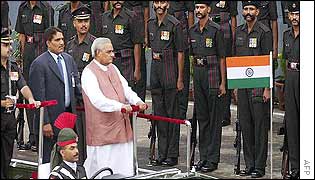 Newspapers have voiced concern and hope for India's future As India celebrates 55 years of independence, the country's newspapers have voiced concern at the state of democracy and the celebrated ideal of secularism in the country.
The Times of India, one of the most widely circulated dailes, says from hunger to illiteracy, disease to deprivation, superstition to strife, the history of India's freedom has been one of unrealised promise. "In the past, we could ostensibly flaunt our democracy - the world's largest as we keep reminding ourselves - to make up for other deficiencies, but with the passage of time, even that pretence has begun to lose its gloss," the paper said. "The real thing looks increasingly like a poor imitation of the genuine article. "It is ironic but apt that the run-up to this year's independence day has been marked by the spectacle of a prematurely adjourned parliament where no business could be transacted for more than a week owing to an ongoing face-off between the treasury and the opposition benches," it said. "The cause of the tiff - partisan disbursement of state patronage to members of the ruling party - too is symptomatic of a deeper malaise," the paper said. "We need to ask ourselves if, instead of promoting the end of autonomy or self-dependence, our democracy has not made us prisoners of a state system where the road to opportunity runs through the corridors of political power." Dismal picture Another widely-read daily The Asian Age says independence day should also be an opportunity for reflection and introspection. The paper says India has made tremendous progress in many fields but the people of India still suffer from discrimination.
"The poor have no voice and live in unimaginable squalor unrelieved by progress and development," it said. "The twin evils of corruption and communalism continue to plague society, with the Gujarat violence a horrific reminder of the partition days when man had turned into beast." "The ruling conglomerate is embroiled in messy deals, the secular fabric is under systematic assault and with an opposition stymied by its own inadequacies, the scenario is unfortunately grim," the paper said. But it adds there are rays of light at the end of the tunnel. "A responsive media, a still independent Supreme Court, a sensitive president, an honest and committed chief election commissioner are the institutions that will flood the dark with light," the paper concludes. Democracy wins The Hindustan Times , another widely circulated daily, says there are no differences between politicians, whatever labels they may flaunt. It criticises India's main governing Bharatiya Janata Party and says the myth that it was a party with a difference has exploded. "All the parties can now be said to have been cut to size," the paper said. But it goes on to say that the eradication of differences between the political parties may not be a bad thing. "A levelling of this nature is helpful in the sense that it enables the voters to make their choices on a far more impersonal and practical basis than before. "What is important to note in this context is that while the parties have lost their stature, democracy has retained its magical appeal." Mixed fortunes Another popular daily, The Indian Express, has invited people to join a debate on how far has India got in the past 55 years. A report on the paper's website says India as a nation has had a mixed bag. In many fields, like science and technology, it has moved forward, it says. "The economy has moved on from its state-sponsored socialistic ideals to a more open, globally integrated one." But at the same time, India is still struggling, the paper said. "Poverty, illiteracy and exploitation of the weaker sections are still major problems. "Religious polarisation and regional separatism continue to rear up every now and then and political corruption has visibly increased." | |
See also:  15 Aug 02 | South Asia 15 Aug 02 | South Asia 15 Aug 02 | South Asia 06 Aug 02 | South Asia 30 Jul 02 | South Asia Internet links: The BBC is not responsible for the content of external internet sites Top South Asia stories now: Links to more South Asia stories are at the foot of the page. | ||||||||||||||||||||||||||||||||||||||||||||||||||||||||||||||||||||||||||||||||||||||||||||||||||||||||||||||||||||||||||||||||||||||||||||||||||||||||||||||||||||||||||
| |
|  E-mail this story to a friend E-mail this story to a friend |
| |
| Links to more South Asia stories |
| | | ||
 | ||||
 | | Back to top
| ||
| ---------------------------------------------------------------------------------- To BBC Sport>> | To BBC Weather>> | To BBC World Service>> ---------------------------------------------------------------------------------- © MMIII | News Sources | Privacy |