|
 |
 | | | | | | ||||||||||||||||||||||||||||||||||||||||||||||||||||||||||||||||||||||||||||||||||||||||||||||||||||||||||||||||||||||||||||||||||||||||||||||||||||||||||||||||||||||||||||||||||||||||||||
| | | You are in: South Asia | ||||||||||||||||||||||||||||||||||||||||||||||||||||||||||||||||||||||||||||||||||||||||||||||||||||||||||||||||||||||||||||||||||||||||||||||||||||||||||||||||||||||||||||||||||||||||||||||
|
| | Friday, 12 July, 2002, 12:24 GMT 13:24 UK Analysis: Musharraf rating hits new low 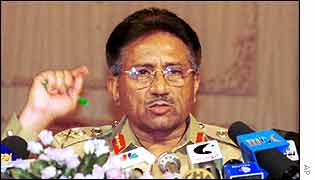 The general has few friends left
Pakistani President General Pervez Musharraf's fortunes have fluctuated in recent months. Of late, the military ruler's so-called reforms have caused concern both in Pakistan and abroad.
For the coup leader, who became the darling of America in its anti-terror campaign, his credibility is at its lowest ebb. Last week, when he issued a decree barring former prime ministers Benazir Bhutto and Nawaz Sharif from a third term, politicians accused him of throttling the country's popular leadership. Free vote? His first set of constitutional amendments last month gave him sweeping powers to sack elected premiers, to dismiss the cabinet and provincial and federal assemblies and to declare a state of emergency.
General Musharraf was seen as the leader of a new Pakistan after he broke ranks with Afghanistan's Taleban and cracked down on militant groups. But the boldness that characterised his speech immediately after 11 September is missing nowadays. Though he has promised elections to Pakistan's federal and provincial assemblies on 10 October, political parties are worried about how free and fair the vote will be. Parties under pressure Pakistani journalists say his so-called reforms and constitutional amendments are designed to rein in the next parliament.
If they fail to comply, the authorities will withdraw the parties' symbols - essential in rural areas where illiteracy rates are high - and could disqualify them from running altogether. With over 97% votes cast in his favour, General Musharraf's referendum in April was seen as stage-managed to extend his hold on power for another five years. Isolated
Pakistan's main political parties refused to meet him to discuss the recent military stand-off with India. They see the general as uncompromising towards them. He is criticised for subordinating Pakistan's autonomous institutions to the military rule. The Supreme Court verdict upholding a decree requiring all candidates to be graduates is viewed not only as undemocratic, but also as evidence that the court cannot deliver independent judgements under a military regime. Discontent growing However, most of the parties have expressed their intention to contest the October elections. The average Pakistani remains interested in democracy, but perhaps it may be time now for the politicians to prepare to share power with the armed forces. Just a few days ago, the authorities revealed what they allege was a failed attempt to assassinate General Musharraf. What confronts him, however, is not any immediate threat to his rule from within the army or outside, but a growing discontent with his attempts to acquire an absolute control on power. | |
See also:  07 Jul 02 | South Asia 27 Jun 02 | South Asia 21 Jun 02 | South Asia Internet links: The BBC is not responsible for the content of external internet sites Top South Asia stories now: Links to more South Asia stories are at the foot of the page. | ||||||||||||||||||||||||||||||||||||||||||||||||||||||||||||||||||||||||||||||||||||||||||||||||||||||||||||||||||||||||||||||||||||||||||||||||||||||||||||||||||||||||||||||||||||||||||||
| |
|  E-mail this story to a friend E-mail this story to a friend |
| |
| Links to more South Asia stories |
| | | ||
 | ||||
 | | Back to top
| ||
| ---------------------------------------------------------------------------------- To BBC Sport>> | To BBC Weather>> | To BBC World Service>> ---------------------------------------------------------------------------------- © MMIII | News Sources | Privacy |