|
 |
 | | | | | | ||||||||||||||||||||||||||||||||||||||||||||||||||||||||||||||||||||||||||||||||||||||||||||||||||||||||||||||||||||||||||||||||||||||||||||||||||||||||||||||||||||||||||||||||||||
| | | You are in: South Asia | ||||||||||||||||||||||||||||||||||||||||||||||||||||||||||||||||||||||||||||||||||||||||||||||||||||||||||||||||||||||||||||||||||||||||||||||||||||||||||||||||||||||||||||||||||||||
|
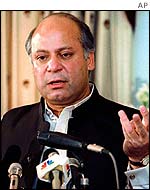
| | Thursday, 27 June, 2002, 13:32 GMT 14:32 UK Musharraf 'threat to democracy' Musharraf is seeking to increase his own authority Pakistan's opposition are up in arms over constitutional proposals which would increase President General Pervez Musharraf's powers.
But the plans unveiled on Wednesday would limit the premier's authority, enabling the president to name and dismiss the prime minister and his cabinet. "The document released by the junta... if implemented, will ring the death knell of democracy in the country," the Pakistan People's Party (PPP) of exiled former prime minister Benazir Bhutto said in a statement. Decree The Pakistan Muslim League (PML) led by Nawaz Sharif, the prime minister ousted in 1999 and now also exiled, was equally unimpressed.
Various civil rights and legal groups have also criticised the plans, saying they will prevent a return to true democracy. One political analyst, Nadeem Syed, says Pakistan is now well on its way to having a president who calls all the shots. "The president has emerged as a new godfather of the political system, too powerful and awesome for the political institutions to challenge or undermine him," he wrote in The Nation on Thursday. Political sources say General Musharraf is likely to implement the changes by decree before elections for prime minister are held in October. Sweeping changes Under the current constitution, the president must act on the prime minister's advice.
The amendments also include provisions to cut the terms of parliament and prime minister from five years to four. In addition, the proposals provide for a permanent 10-member policy-making National Security Council (NSC), which General Musharraf would head. The minimum voting age would also be lowered from 21 to 18 and changes would be made to the number of seats in the national and provincial assemblies. Public debate Announcing the proposals, Information Secretary Syed Anwar Mahmood said General Musharraf and his cabinet would hold a month-long debate before deciding whether to effect the changes. According to the draft, the president would have the power to fire elected officials "for serious abuse of authority, failure to check corruption, compromising national security interests and violation of the constitution". General Musharraf was empowered to implement such changes by a Supreme Court ruling that validated his coup. Opposition groups want him to hand power over to an interim administration to oversee the forthcoming elections. | |
See also:  04 May 02 | South Asia 04 May 02 | South Asia 01 May 02 | South Asia 05 Apr 02 | South Asia 05 Apr 02 | South Asia 03 Apr 02 | South Asia Internet links: The BBC is not responsible for the content of external internet sites Top South Asia stories now: Links to more South Asia stories are at the foot of the page. | ||||||||||||||||||||||||||||||||||||||||||||||||||||||||||||||||||||||||||||||||||||||||||||||||||||||||||||||||||||||||||||||||||||||||||||||||||||||||||||||||||||||||||||||||||||
| |
|  E-mail this story to a friend E-mail this story to a friend |
| |
| Links to more South Asia stories |
| | | ||
 | ||||
 | | Back to top
| ||
| ---------------------------------------------------------------------------------- To BBC Sport>> | To BBC Weather>> | To BBC World Service>> ---------------------------------------------------------------------------------- © MMIII | News Sources | Privacy |