|
 |
 | | | | | | |||||||||||||||||||||||||||||||||||||||||||||||||||||||||||||||||||||||||||||||||||||||||||||||||||||||||||||||||||||||||||||||||||||||||||||||||||||||||||
| | | You are in: Science/Nature | |||||||||||||||||||||||||||||||||||||||||||||||||||||||||||||||||||||||||||||||||||||||||||||||||||||||||||||||||||||||||||||||||||||||||||||||||||||||||||||
|
| | Thursday, 13 February, 2003, 20:51 GMT Nasa ends search for astronauts' remains  Astronaut Ilan Ramon has already been buried The United States space agency Nasa has identified the remains of all seven astronauts who died when the space shuttle Columbia broke up on 1 February and is calling off the search. The remains of the six US crew members have been taken to a Defence Department mortuary in the state of Delaware. Israeli astronaut Ilan Ramon was buried in his country on Tuesday.
On the same day, the agency released an e-mail written before the crash that warned of potentially "catastrophic" results if there were problems with the shuttle's wheel well. Damage to the wheel well - one of the most vulnerable parts of the shuttle - is considered a possible cause for the disaster. 'Worst-case scenario' Warning that he was "erring way on the side of absolute worst-case scenarios", engineer Robert Daugherty's e-mail listed problems that could occur if landing gear failed to deploy properly.
A Nasa spokeswoman said the astronauts' remains would be released to the families for private memorial services. "This is a private matter for the families and we are trying to respect that," spokeswoman Eileen Hawley said. On Wednesday, Nasa's top official Sean O'Keefe told the first congressional hearing into the tragedy that throughout Columbia's 16-day mission there were "no indications" the disaster would occur. Cause unknown It is still unclear what caused Columbia to disintegrate 40 miles (65 kilometres) above the Earth. The first pieces of debris have started to arrive at the Kennedy Space Center in Florida, where investigators hope to reconstruct the shuttle to look for clues for what caused it to break up.
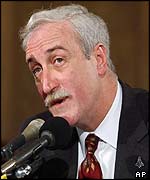
Mr O'Keefe was testifying before a joint House and Senate committee set up to examine the Columbia disaster and to consider the future of the national space programme. He said the cause of the disintegration would be found and addressed. But he called for continued support for the work of Nasa, including manned space flight as well as the use of machines. "We know the lesson from this terrible accident is not to turn our backs on exploration simply because it is too hard or risky," he said. "We will find the problem that caused the loss of Columbia and its crew, we will fix it and we will return to flight operations that are as safe as humanly possible in pursuit of knowledge." | |
See also:  11 Feb 03 | Middle East 11 Feb 03 | Science/Nature 07 Feb 03 | Americas 06 Feb 03 | Americas 05 Feb 03 | Americas 01 Feb 03 | Americas Internet links: The BBC is not responsible for the content of external internet sites Top Science/Nature stories now: Links to more Science/Nature stories are at the foot of the page. | |||||||||||||||||||||||||||||||||||||||||||||||||||||||||||||||||||||||||||||||||||||||||||||||||||||||||||||||||||||||||||||||||||||||||||||||||||||||||||
 | |
|  E-mail this story to a friend E-mail this story to a friend |
| |
| Links to more Science/Nature stories |
| | | ||
 | ||||
 | | Back to top
| ||
| ---------------------------------------------------------------------------------- To BBC Sport>> | To BBC Weather>> | To BBC World Service>> ---------------------------------------------------------------------------------- © MMIII | News Sources | Privacy |




 At some point the wheel could fail and send debris everywhere