|
 |
 | | | | | | |||||||||||||||||||||||||||||||||||||||||||||||||||||||||||||||||||||||||||||||||||||||||||||||||||||||||||||||||||||||||||||||||||||||||||||||||||||||||||||||||||||||||||||||||||||||||
| | | You are in: Science/Nature | |||||||||||||||||||||||||||||||||||||||||||||||||||||||||||||||||||||||||||||||||||||||||||||||||||||||||||||||||||||||||||||||||||||||||||||||||||||||||||||||||||||||||||||||||||||||||||
|
| | Tuesday, 11 February, 2003, 03:54 GMT Space shuttle's left wing found  Hemphill, Texas, a centre for the recovery operation Investigators have identified at least part of the left wing of the space shuttle Columbia, Nasa has said. The find is significant because the shuttle's difficulties appear to have originated in the left wing when the Columbia broke up minutes before it was due to land on 1 February.
But the piece included some carbon-carbon tile, an extremely dense material that covered the leading edge of the wing, Mr Kostelnik said. The US space agency is looking into the possibility that ice or space debris caused damage to a wing. Impact theory The 46-cm (18-inch) long fragment of Columbia's left wing was found last week east of the city of Fort Worth, near the town of Lufkin in Texas, but has only now been identified. Investigators have already been examining a piece of one of Columbia's wings for signs that it could have been hit by a chunk of ice or another object. More than a week after the shuttle disintegrated as it returned to Earth, the evidence collected so far fails to point to any obvious cause.
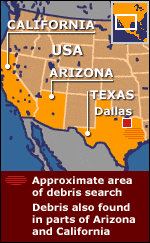
The head of the independent accident investigation board, Admiral Hal Gehman, said it was too early to say if the latest clues meant anything. Before the latest find, investigators were examining a small unknown object picked up by military radar. Seen moving away from Columbia on the second day of the 16-day science mission, it could be debris or it could be ice from waste water routinely dumped by the shuttle. Nasa spokesman Bill Jeffs said on Sunday: "It's only preliminary data; it's too early to tell whether the shuttle was stuck by debris or something else." The US Space Command Center in Nebraska is providing data on the object. Meanwhile, investigators are continuing to examine a 60 centimetre (2-foot) section of one of Columbia's wings and the door of a landing gear compartment. They are among some 12,000 pieces of shuttle debris that have been found in Texas and Louisiana. Every possible scenario for the disaster is still being considered, including a strike from a piece of space junk and a lightning-like electrical phenomenon. Experts are also looking at a high-resolution image taken by an Air Force telescope minutes before Columbia broke up. Some say it shows that the leading edge of the left wing was damaged. | |
See also:  10 Feb 03 | Middle East 07 Feb 03 | Americas 06 Feb 03 | Americas 05 Feb 03 | Americas 01 Feb 03 | Americas Internet links: The BBC is not responsible for the content of external internet sites Top Science/Nature stories now: Links to more Science/Nature stories are at the foot of the page. | |||||||||||||||||||||||||||||||||||||||||||||||||||||||||||||||||||||||||||||||||||||||||||||||||||||||||||||||||||||||||||||||||||||||||||||||||||||||||||||||||||||||||||||||||||||||||
 | |
|  E-mail this story to a friend E-mail this story to a friend |
| |
| Links to more Science/Nature stories |
| | | ||
 | ||||
 | | Back to top
| ||
| ---------------------------------------------------------------------------------- To BBC Sport>> | To BBC Weather>> | To BBC World Service>> ---------------------------------------------------------------------------------- © MMIII | News Sources | Privacy |




 It's only preliminary data; it's too early to tell whether the shuttle was stuck by debris or something else