|
 |
 | | | | | | ||||||||||||||||||||||||||||||||||||||||||||||||||||||||||||||||||||||||||||||||||||||||||||||||||||||||||||||||||||||||||||||||||||||||||||||
| | | You are in: Science/Nature | ||||||||||||||||||||||||||||||||||||||||||||||||||||||||||||||||||||||||||||||||||||||||||||||||||||||||||||||||||||||||||||||||||||||||||||||||
|
| | Wednesday, 4 September, 2002, 00:08 GMT 01:08 UK Stunning asteroid picture revealed 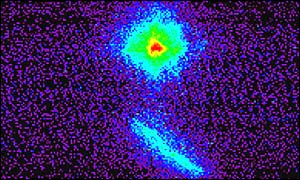 The asteroid above the trail of stars
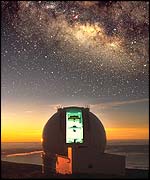
At the time, the space rock was 400 metres (a quarter of a mile) across and could be seen with binoculars or a small telescope. The nearest it came was 750,000 kilometres (466,028 miles) of the Earth - twice the distance to the Moon. Astronomers say the asteroid, known as 2002 NY40, posed no danger to life on Earth. But if it had hit our planet, the force would have been equivalent to that of several nuclear bombs. Twinkling stars The pictures were taken by the William Herschel Telescope on La Palma, Canary Islands, on the night of 18 August.
The technology was built by a team from the University of Durham and the UK Astronomy Technology Centre (UK ATC). It allows ground-based telescopes to deliver images as good as those taken from space. It does this by using mirrors to correct for the blurring of starlight caused by turbulence in the Earth's atmosphere. "In future, this is going to mean the giant telescopes that are coming into operation will be able to produce sharper images than can be produced by the Hubble Space Telescope," said Colin Cunningham of the UK ATC. 'Collision course' Space objects come this close to Earth only once every 50 years or so. It is a rare opportunity to study the nature and potential threat of the fraction of asteroids that approach the planet. "Getting more detailed data on objects such as this will help us to understand more about their nature and how to deal with one should it find itself on a collision course with Earth," said Kevin Yates of the UK Near Earth Object (NEO) Information Centre. "A 400-metre asteroid would probably wipe out most of England if it hit," he told BBC News Online. Images courtesy of the Isaac Newton Group of Telescopes. | | See also:  19 Aug 02 | Science/Nature 17 Aug 02 | Breakfast 01 Aug 02 | Science/Nature 09 Aug 02 | Science/Nature Internet links: The BBC is not responsible for the content of external internet sites Top Science/Nature stories now: Links to more Science/Nature stories are at the foot of the page. | ||||||||||||||||||||||||||||||||||||||||||||||||||||||||||||||||||||||||||||||||||||||||||||||||||||||||||||||||||||||||||||||||||||||||||||||
| |
|  E-mail this story to a friend E-mail this story to a friend |
| |
| Links to more Science/Nature stories |
| | | ||
 | ||||
 | | Back to top
| ||
| ---------------------------------------------------------------------------------- To BBC Sport>> | To BBC Weather>> | To BBC World Service>> ---------------------------------------------------------------------------------- © MMIII | News Sources | Privacy |