|
 |
 | | | | | | ||||||||||||||||||||||||||||||||||||||||||||||||||||||||||||||||||||||||||||||||||||||||||||||||||||||||||||||||||||||||||||||||||||||||||||||||||||||||||||||||||||||||||||||||||||||||||||||||||||||||||||||||||||||||||
| | | You are in: Programmes: Breakfast | ||||||||||||||||||||||||||||||||||||||||||||||||||||||||||||||||||||||||||||||||||||||||||||||||||||||||||||||||||||||||||||||||||||||||||||||||||||||||||||||||||||||||||||||||||||||||||||||||||||||||||||||||||||||||||||
|
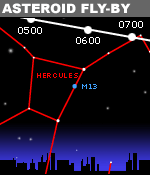
| |  Saturday, 17 August, 2002, 07:08 GMT 08:08 UK Saturday, 17 August, 2002, 07:08 GMT 08:08 UK How to see that asteroid 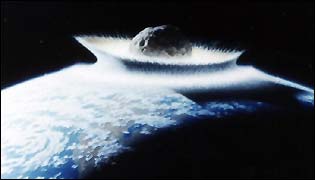 If you're still awake in the early hours of Sunday morning, you may be able to see an asteroid as it passes within 333,000 of the earth. The rock is only half a mile across and will be as far away from our home planet as the moon is. But, if you're lucky and you have a decent pair of binoculars or a telescope, you may be able to see it at around 3-5am on Sunday morning. On Breakfast this morning, we talked to Dr Robert Massey, of the Greenwich Royal Observatory. He explained that the asteroid will not be very easy to spot: you'll need a good map and a decent pair of binoculars. This sort of near miss happens once every 50 years. But, according to Dr Massey, that does not mean we should be complacent: "A hit from something this size would create a crater 10km across." The dust from such an impact might disrupt weather systems across an entire continent. Details The opportunity for amateur skywatchers to get such a close-up view of an asteroid occurs only once every half-century.
Future pass Its track in the sky will pass close by the bright star Vega and through the constellation of Hercules. It will be significantly dimmer than even the faintest star visible with the naked eye. European skywatchers will catch their best glimpse in the early hours of Sunday. For viewing from North America, the best time to watch will be on Saturday evening. Scientists will be able to use the close approach to plot the course of the asteroid over the years to come. They say there is a minute risk - one in 500,000 - that the rock could strike Earth in 2022, but the new measurements could show it will definitely miss us. Drawing skills Jay Tate, from the Spaceguard UK observatory in Powys, said that with a little effort, it should be possible to detect the movement of the asteroid.
"Then they should look again five minutes or so later and see which of them has moved. "This asteroid won't look anything like a normal shooting star, or even a satellite. "It's not groundbreaking science for us, but this is an opportunity for thousands of amateur astronomers to see something like this." Spin rate He said that measurements taken by experts might show the rate at which the rock was spinning in space, giving clues to its composition. Other astronomers may also be able to produce three-dimensional maps of its surface. The asteroid fly-by follows last month's reports of another, bigger, rock, called 2002 NT7, which scientists speculated might be a candidate for colliding with the Earth in 2019. Further data revealed, however, that there was no chance of this happening. | |
See also:  01 Aug 02 | Science/Nature 29 Jul 02 | Sci Tech 24 Jul 02 | Forum 21 Jun 02 | Sci Tech Internet links: The BBC is not responsible for the content of external internet sites | ||||||||||||||||||||||||||||||||||||||||||||||||||||||||||||||||||||||||||||||||||||||||||||||||||||||||||||||||||||||||||||||||||||||||||||||||||||||||||||||||||||||||||||||||||||||||||||||||||||||||||||||||||||||||||
| |
|  E-mail this story to a friend E-mail this story to a friend |
| |
| Links to more Breakfast stories |
| | | ||
 | ||||
 | | Back to top
| ||
| ---------------------------------------------------------------------------------- To BBC Sport>> | To BBC Weather>> | To BBC World Service>> ---------------------------------------------------------------------------------- © MMIII | News Sources | Privacy |