|
 |
 | | | | | | |||||||||||||||||||||||||||||||||||||||||||||||||||||||||||||||||||||||||||||||||||||||||||||||||||||||||||||||||||||||||||||||||||||||||||||||||||||||||||||||||||||||
| | | You are in: Science/Nature | |||||||||||||||||||||||||||||||||||||||||||||||||||||||||||||||||||||||||||||||||||||||||||||||||||||||||||||||||||||||||||||||||||||||||||||||||||||||||||||||||||||||||
|
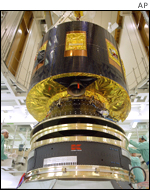
| | Thursday, 29 August, 2002, 10:31 GMT 11:31 UK Weather satellite enters orbit 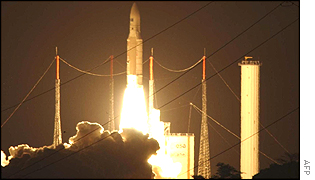 Blast-off was delayed by a day after a technical glitch Space scientists are celebrating after the successful launch of a new European weather satellite. The MSG-1 weather satellite was blasted into orbit on an Ariane 5 rocket in what was described as a "flawless launch".
The space rocket was also carrying a telecommunications satellite, Atlantic Bird-1. Both satellites were put into orbit 40 minutes after the launch time of 1945 (2245 GMT) on Wednesday. Extreme weather MSG-1 is one of three Meteosat Second Generation (MSG) satellites which will go into orbit around the Earth over the next seven years.
It says the technology should lead to better forecasts especially for severe weather such as storms, hurricanes and fog. The satellites will also contribute to the monitoring of climate change. They will fly new, more powerful instruments to observe the Earth's atmosphere. Climate change The new satellite, MSG-1, will observe the Earth from an orbit 35,780 km (22,230 miles) above the equator. Once in position, it will circle the Earth every day, keeping pace with the planet's rotation and appearing to "hover" over the same point. It will be manoeuvred into what is known as a geostationary orbit over the next few weeks by controllers at the European Space Agency's (ESA's) operations centre in Darmstadt, Germany. "With the world's political leaders gathered in Johannesburg to discuss the requirements for sustainable global development of our planet, ESA is proud to have deployed this satellite on behalf of Eumetsat and for the benefit of countless users," said Jos� Achache, ESA Director of Earth Observation. "It is going to improve weather forecasting, our understanding of climate change and the issue of the planet's water resources." | |
See also:  29 Aug 02 | Science/Nature 07 Aug 02 | Science/Nature 29 Feb 00 | Science/Nature 05 Jul 01 | South Asia 15 Jul 99 | Africa 21 Aug 01 | UK 06 Sep 99 | Science/Nature Internet links: The BBC is not responsible for the content of external internet sites Top Science/Nature stories now: Links to more Science/Nature stories are at the foot of the page. | |||||||||||||||||||||||||||||||||||||||||||||||||||||||||||||||||||||||||||||||||||||||||||||||||||||||||||||||||||||||||||||||||||||||||||||||||||||||||||||||||||||||
| |
|  E-mail this story to a friend E-mail this story to a friend |
| |
| Links to more Science/Nature stories |
| | | ||
 | ||||
 | | Back to top
| ||
| ---------------------------------------------------------------------------------- To BBC Sport>> | To BBC Weather>> | To BBC World Service>> ---------------------------------------------------------------------------------- © MMIII | News Sources | Privacy |