
|
 |
 | | | | | | ||||||||||||||||||||||||||||||||||||||||||||||||||||||||||||||||||||||||||||||||||||||||||||||||||||||||||||||||||||||||||||||||||||||||||||||||||||||||||||||||||||||
| | | You are in: Science/Nature | ||||||||||||||||||||||||||||||||||||||||||||||||||||||||||||||||||||||||||||||||||||||||||||||||||||||||||||||||||||||||||||||||||||||||||||||||||||||||||||||||||||||||
|
| | Thursday, 29 August, 2002, 00:21 GMT 01:21 UK Smooth launch for weather satellite 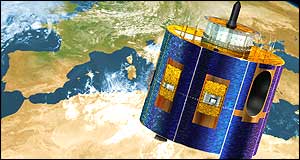 MSG-1: Will see weather changes over Europe Europe has successfully launched the first of a new generation of European weather satellites after an electrical fault delayed blast-off by one day. The MSG-1 weather satellite took off on an Ariane 5 rocket from the Kourou spaceport in French Guiana, South America, at 1945 (2245 GMT) on Wednesday. The rocket, which was also carrying an Atlantic Bird-1 telecommunications satellite, deployed both satellites in orbit within 40 minutes of its launch. Meteorologists say the new weather satellite will lead to better forecasts, especially for severe weather such as storms and fog, and will also help monitor climate change. Click here to see how new weather maps might look The launch had been due for Tuesday night but was held up by a fault. New generation MSG-1 is the first of three Meteosat Second Generation (MSG) satellites to go into orbit around the Earth over the next seven years. The European weather satellite organisation Eumetsat is managing and funding the 1.3 billion Euro venture.
The world's first dedicated weather satellite, Tiros 1, was launched by the United States in April 1960. This was followed, in 1977, by Europe's first weather satellite, Meteosat 1, followed by six more Meteosat satellites. The first of the new generation, MSG-1, will observe the Earth from an orbit 35,780 km (22,230 miles) above the equator. Like its predecessors, it will circle the Earth every day, keeping pace with the planet's rotation and appearing to "hover" over the same point. 'Far from perfect' Scientists are taking advantage of this vantage point to monitor climate change. An instrument known as GERB (Geostationary Earth Radiation Budget) will measure the energy balance of the Earth as the planet absorbs energy from the Sun and radiates it out to space. This will be used to assess long term trends in climate change. Professor John Harries from Imperial College London is principal investigator of the experiment. He told the BBC: "What we are basically doing is using observations of the Earth from space to test and to validate the large, very powerful, climate models that we use to predict our climate future. "These models are very clever but they are far from perfect," he added. 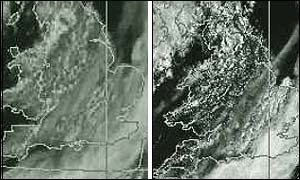 The new satellite will give clearer images (right) | |
See also:  07 Aug 02 | Science/Nature 29 Feb 00 | Science/Nature 05 Jul 01 | South Asia 15 Jul 99 | Africa 21 Aug 01 | UK 06 Sep 99 | Science/Nature Internet links: The BBC is not responsible for the content of external internet sites Top Science/Nature stories now: Links to more Science/Nature stories are at the foot of the page. | ||||||||||||||||||||||||||||||||||||||||||||||||||||||||||||||||||||||||||||||||||||||||||||||||||||||||||||||||||||||||||||||||||||||||||||||||||||||||||||||||||||||
| |
|  E-mail this story to a friend E-mail this story to a friend |
| |
| Links to more Science/Nature stories |
| | | ||
 | ||||
 | | Back to top
| ||
| ---------------------------------------------------------------------------------- To BBC Sport>> | To BBC Weather>> | To BBC World Service>> ---------------------------------------------------------------------------------- © MMIII | News Sources | Privacy |






