
|
 |
 | | | | | | |||||||||||||||||||||||||||||||||||||||||||||||||||||||||||||||||||||||||||||||||||||||||||||||||||||||||||||||||||||||||||||||||||||||||||||
| | | You are in: Science/Nature | |||||||||||||||||||||||||||||||||||||||||||||||||||||||||||||||||||||||||||||||||||||||||||||||||||||||||||||||||||||||||||||||||||||||||||||||
|
| | Thursday, 22 August, 2002, 11:13 GMT 12:13 UK How accurate are lie detectors? 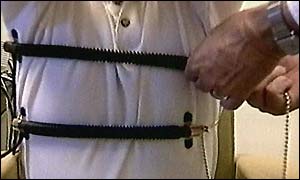
Lie detectors, or polygraphs, which may be used to see if British sex offenders are at risk of committing further crimes, have been in use for over 80 years but have always been controversial. The first legal judgement that the machines are not reliable came only six years after they were invented. Though scientists and psychologists have improved lie detectors over the years, there is still little hard evidence on how effective they are. Proponents say they are accurate in 90% of cases, but critics believe this figure is vastly inflated. Outside the United States, the machines are not widely used. Successive reviews by US Government committees have concluded that there is not enough reliable evidence to assess the validity of polygraph tests. Blood and sweat The concept of lie detecting machines is based on the fact that when a person lies, there are certain changes in physiology which can be measured. The modern polygraph works by measuring several basic changes, which can include breathing rate, the electrical conductivity of the skin, heart rate, and blood pressure. While the subject is wired up to the machine, he or she is given a set of questions carefully designed by psychologists. Use of polygraphs peaked in the USA in the 1980s, when government agencies administered over 20,000 tests. They were mostly used on suspected criminals, though job applicants were also subjected to testing. A review by the government's Office of Technology Assessment in 1983 concluded that an accurate measure of polygraph accuracy was impossible. The report said that polygraphs cannot be objective, because the examiners, the questions asked, and the type of people being tested vary too widely. It noted that the conclusions of scientific studies trying to measure accuracy varied widely. Later in the 1980s the US passed a law preventing most private sector employers from testing job applicants. Spore chasing In the aftermath of September 11th, polygraphs have gained a higher profile in the USA. Americans working at laboratories with stocks of anthrax have been tested. Sceptics would point out that the FBI has yet to make an arrest. The fall of the Twin Towers and the anthrax investigations have also focussed attention on newer ideas for lie detection which could be more reliable. Ideas include a heat-sensing camera which can measure tiny temperature fluctuations on people's faces, and magnetic resonance scanners which observe the brain's inner workings. Neither technique is ready for use, and civil liberty campaigners believe that both would bring new infringements to the rights of the citizen. | | See also:  22 Aug 02 | UK 06 Jan 02 | UK 31 Jul 01 | Americas 24 Mar 01 | Americas 16 Mar 01 | UK Internet links: The BBC is not responsible for the content of external internet sites Top Science/Nature stories now: Links to more Science/Nature stories are at the foot of the page. | |||||||||||||||||||||||||||||||||||||||||||||||||||||||||||||||||||||||||||||||||||||||||||||||||||||||||||||||||||||||||||||||||||||||||||||
| |
|  E-mail this story to a friend E-mail this story to a friend |
| |
| Links to more Science/Nature stories |
| | | ||
 | ||||
 | | Back to top
| ||
| ---------------------------------------------------------------------------------- To BBC Sport>> | To BBC Weather>> | To BBC World Service>> ---------------------------------------------------------------------------------- © MMIII | News Sources | Privacy |





