|
 |
 | | | | | | |||||||||||||||||||||||||||||||||||||||||||||||||||||||||||||||||||||||||||||||||||||||||||||||||||||||||||||||||||||||||||||||||||||||
| | | You are in: Science/Nature | |||||||||||||||||||||||||||||||||||||||||||||||||||||||||||||||||||||||||||||||||||||||||||||||||||||||||||||||||||||||||||||||||||||||||
|
| | Monday, 29 July, 2002, 15:22 GMT 16:22 UK Lobster mystery solved 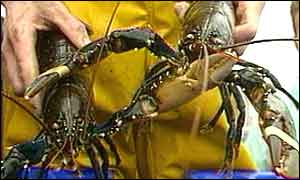 Blue-black lobsters: Destined for the pot British scientists have cracked the puzzle of why lobsters turn pink in the pot. Their shell loses its natural blue-black colour due to changes in a key protein - and now researchers understand precisely how.
The discovery could lead to new treatments for a number of human diseases including cancer. It also raises the possibility of novel "lobster-colour" food dyes that could provide a more natural alternative to existing colourants. Blue crystals Anyone who has seen a live lobster will know that the crustacean is normally blue-black. It is camouflage for hiding among rocks on the ocean floor to avoid predators. If an unfortunate specimen ends up being cooked, its shell changes colour due to the structure of a protein called beta-crustacyanin. Part of this molecule is able to change shape, bending the shape of another molecule attached to it, called astaxanthin.
On cooking, the crustacyanin unit is broken down, and astaxanthin becomes stuck in the orange form. The research was carried out by scientists at Imperial College London, the University of Manchester, Daresbury Laboratory and Royal Holloway, University of London. They managed to solve the structure of beta-crustacyanin by extracting it from the lobster and growing beautiful blue crystals. The next step is to work out how to utilise the knowledge for medicine or the food industry. Medical spin-offs "This carotenoid astaxanthin is responsible for the change in colour of lobster from blue to pink upon cooking," Dr Naomi Chayen of Imperial College told BBC News Online. "It is a powerful antioxidant which protects against damage from cell membranes and tissues." She said the research could lead to new uses of astaxanthin as a drug-delivery mechanism for medicines that are insoluble in water. It could also give designers of new food colourants or dyestuffs an interesting new capability, she added. The Imperial research is published in the journal Proceedings of the National Academy of Sciences. | | See also:  29 Aug 01 | UK 09 May 01 | Science/Nature 23 Aug 00 | UK Internet links: The BBC is not responsible for the content of external internet sites Top Science/Nature stories now: Links to more Science/Nature stories are at the foot of the page. | |||||||||||||||||||||||||||||||||||||||||||||||||||||||||||||||||||||||||||||||||||||||||||||||||||||||||||||||||||||||||||||||||||||||
| |
|  E-mail this story to a friend E-mail this story to a friend |
| |
| Links to more Science/Nature stories |
| | | ||
 | ||||
 | | Back to top
| ||
| ---------------------------------------------------------------------------------- To BBC Sport>> | To BBC Weather>> | To BBC World Service>> ---------------------------------------------------------------------------------- © MMIII | News Sources | Privacy |