|
 |
 | | | | | | ||||||||||||||||||||||||||||||||||||||||||||||||||||||||||||||||||||||||||||||||||||||||||||||||||||||||||||||||||||||||||||||||||||||||||||||||
| | | You are in: Science/Nature | ||||||||||||||||||||||||||||||||||||||||||||||||||||||||||||||||||||||||||||||||||||||||||||||||||||||||||||||||||||||||||||||||||||||||||||||||||
|
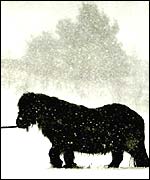
| | Tuesday, 16 July, 2002, 02:06 GMT 03:06 UK Origins of domestic horse revealed 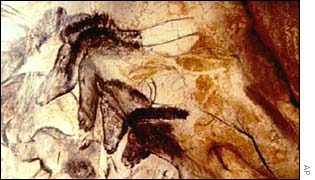 Cave paintings: An early sign that people valued horses
DNA evidence shows modern horses are descended from not one but several wild populations.
At least 77 wild mares passed on their genes to today's modern horse breeds, from the American mustang to the Shetland pony. "We see traces of original wild populations of horses that have been incorporated into the domestic horses of today," says co-researcher Dr Peter Forster of the McDonald Institute for Archaeological Research, University of Cambridge, UK. He believes it resolves the debate over whether horses were domesticated from one world population or from several. "The genetic evidence shows that wild horses were recruited for domestication from different areas of the world," he told BBC News Online. "A single, simple origin of horse domestication can be ruled out." This is surprising because other domestic animals - such as cattle, goats and sheep - show a much more restricted origin. Molecular clock The evidence is based on a genetic analysis of more than 600 horses, from 25 horse breeds and varieties worldwide, including Europe, Morocco and the USA. DNA samples were compared with ancient DNA from wild horses living in Sweden and Estonia about 2,000 years ago, and 28,000-year-old horse remains preserved in Alaskan ice.
This scrap of genetic material is found outside of the cell's nucleus and is passed only from mother to child. It accumulates mutations at a known rate, acting as a "molecular clock" for a species, and allowing maternal ancestry to be traced. The Cambridge team, working with colleagues in Germany, believe 77 wild mares or more were the original breeding stock of domesticated horses. They were very different in terms of their genes, suggesting that several distinct horse populations were first captured from the wild. Early nomads The next step, says Dr Forster, is to pinpoint when this took place. This has proved difficult until now, largely because of the poor fossil record for the horse family. The first undisputed evidence for the domestication of the horse dates back to 2,000 BC, when horses were buried with chariots. By 1,000 BC, domestication had spread through Europe, Asia and North Africa. However, some experts believe horses were domesticated much earlier, on the Eurasian Steppes in the Near East between 4,500 and 2,500 BC. They may have been used as pack animals, helping ancient people lead a nomadic way of life, or to provide milk, meat and skins. Full details of the research are published in the Proceedings of the National Academy of Sciences of the USA. | | See also:  10 Jul 02 | England 06 Jun 02 | Science/Nature 14 Nov 01 | Science/Nature Internet links: The BBC is not responsible for the content of external internet sites Top Science/Nature stories now: Links to more Science/Nature stories are at the foot of the page. | ||||||||||||||||||||||||||||||||||||||||||||||||||||||||||||||||||||||||||||||||||||||||||||||||||||||||||||||||||||||||||||||||||||||||||||||||
| |
|  E-mail this story to a friend E-mail this story to a friend |
| |
| Links to more Science/Nature stories |
| | | ||
 | ||||
 | | Back to top
| ||
| ---------------------------------------------------------------------------------- To BBC Sport>> | To BBC Weather>> | To BBC World Service>> ---------------------------------------------------------------------------------- © MMIII | News Sources | Privacy |