|
 |
 | | | | | | |||||||||||||||||||||||||||||||||||||||||||||||||||||||||||||||||||||||||||||||||||||||||||||||||||||||||||||||||||||||||||||||||||||||||||||||||||||||||||||||||||||
| | | You are in: Science/Nature | |||||||||||||||||||||||||||||||||||||||||||||||||||||||||||||||||||||||||||||||||||||||||||||||||||||||||||||||||||||||||||||||||||||||||||||||||||||||||||||||||||||||
|
| | Thursday, 6 June, 2002, 14:51 GMT 15:51 UK Riding the horse revolution When exactly were horses domesticated? Archaeologists working in Kazakhstan are on the trail of the earliest evidence of horse domestication. Evidence suggests the feral animal was once a ferocious creature hunted for its meat across Eurasia. But at a site in the north of the region, the scientists are now attempting to establish to what extent these eneolithic horses were under the direct control of humans. The researchers have discovered whole vertebral columns, skulls and the massive hip bones of horses at Krasnyi Yar. To firm up their theories, the archaeologists need to find out if the animals were brought back to the site as carcases, having been killed some distance away. "If you're on foot and hunt and kill a wild horse far from home, you'd never manage to drag or schlep it back whole," excavation leader, Dr Sandra Olsen, of the Carnegie Museum of Natural History, US, said. "You'd butcher the carcase and bring back meat, leather and perhaps a few bones to make tools," she told the Discovery programme on the BBC World Service. Alcoholic milk Finding evidence that the animals were slaughtered on site would point to domestication of the animals. The process of horse domestication is one of the least understood and most controversial aspects of Eurasian prehistory. Finding out where and when the process began is very important because of the huge impact the innovation had on the world. The work at Krasnyi Yar could yield vital information. The Krasnyi Yar site was inhabited by the Botai culture around 5,500 years ago and is currently home to a geophysical survey. Excavations have revealed more than 160 houses aligned in a village plan.
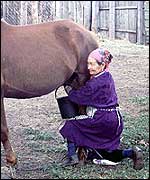
Researchers at the University of Exeter, UK, are currently analysing fragments of unglazed pots found at the scene. By testing them for traces of fat from mare's milk, the scientists hope they may provide important clues about the domestic uses of horses. In Kazakhstan today, mare's milk is fermented to form a mildly alcoholic drink called koumiss. A spokesperson for the project explained: "If ancient horse milking can be demonstrated, we can be fairly sure that the horses were domestic." After all, no one would attempt to milk a wild horse. | |
See also:  28 May 02 | Science/Nature 10 Nov 00 | Science/Nature 14 Nov 01 | Science/Nature 11 Sep 01 | UK Internet links: The BBC is not responsible for the content of external internet sites Top Science/Nature stories now: Links to more Science/Nature stories are at the foot of the page. | |||||||||||||||||||||||||||||||||||||||||||||||||||||||||||||||||||||||||||||||||||||||||||||||||||||||||||||||||||||||||||||||||||||||||||||||||||||||||||||||||||||
| |
|  E-mail this story to a friend E-mail this story to a friend |
| |
| Links to more Science/Nature stories |
| | | ||
 | ||||
 | | Back to top
| ||
| ---------------------------------------------------------------------------------- To BBC Sport>> | To BBC Weather>> | To BBC World Service>> ---------------------------------------------------------------------------------- © MMIII | News Sources | Privacy |