|
 |
 | | | | | | |||||||||||||||||||||||||||||||||||||||||||||||||||||||||||||||||||||||||||||||||||||||||||||||||||||||||||||||||||||||||||||||||||||||||||||||||||||||||||||||||||||||||||||||||||||||||||||||||||||||||
| | | You are in: Science/Nature | |||||||||||||||||||||||||||||||||||||||||||||||||||||||||||||||||||||||||||||||||||||||||||||||||||||||||||||||||||||||||||||||||||||||||||||||||||||||||||||||||||||||||||||||||||||||||||||||||||||||||||
|
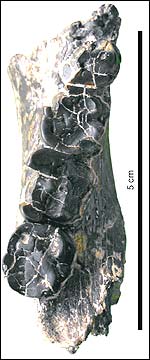
| | Wednesday, 10 July, 2002, 18:00 GMT 19:00 UK 'Astonishing' skull unearthed in Africa Toumai: Oldest ancestor? Image: MPFT
"I knew I would one day find it... I've been looking for 25 years," said Michel Brunet of the University of Poitiers, France. Scientists say it is the most important discovery in the search for the origins of humankind since the first Australopithecus "ape-man" remains were found in Africa in the 1920s. The newly discovered skull finally puts to rest any idea that there might be a single "missing link" between humans and chimpanzees, they say. Messy evolution Analysis of the ancient find is not yet complete, but already it is clear that it has an apparently puzzling combination of modern and ancient features.
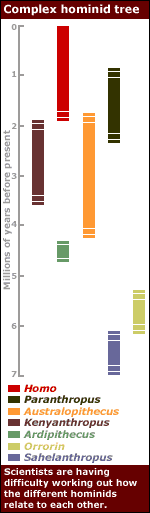
"It shows us there wasn't a nice steady progression from ancient hominids to what we are today," he told BBC News Online. "It's the most important find in living memory, the most important since the australopithecines in the 1920s. "It's amazing to find such a wonderful skull that's so old," he said. The skull is so old that it comes from a time when the creatures which were to become modern humans had not long diverged from the line that would become chimpanzees. There were very few of these creatures around relative to the number of people in the world today, and only a tiny percentage of them were ever fossilised. So despite all the false starts, failed experiments and ultimate winners produced by evolution, the evidence for what went on between 10 and five million years ago is very scarce. Grandparent, great uncle, great aunt? There will be plenty of debate about where the Chad skull fits into the incomplete and sketchy picture researchers have drawn for the origins of the human species.
Sahelanthropus tchadensis, as the find has been named, may turn out to be a direct human ancestor or it may prove to be a member of a side branch of our family tree. The team which found the skull believes it is that of a male, but even that is not 100% clear. "They've called it a male individual, based on the strong brow ridge, but it's equally possible it's a female," said Professor Stringer. Future finds may make the whole picture of human evolution clearer. "We've got to be ready for shocks and surprises to come," he said. The Sahelanthropus has been nicknamed Toumai, a name often given to children born in the dry season in Chad. Full details of the discovery appear in the journal Nature. | |
See also:  10 Jul 02 | Science/Nature 10 Jul 02 | Science/Nature 10 Jul 02 | Science/Nature 21 Mar 01 | Science/Nature 07 Feb 01 | Science/Nature 06 Feb 01 | Science/Nature 16 Jan 01 | Science/Nature 15 Jan 01 | Science/Nature Internet links: The BBC is not responsible for the content of external internet sites Top Science/Nature stories now: Links to more Science/Nature stories are at the foot of the page. | |||||||||||||||||||||||||||||||||||||||||||||||||||||||||||||||||||||||||||||||||||||||||||||||||||||||||||||||||||||||||||||||||||||||||||||||||||||||||||||||||||||||||||||||||||||||||||||||||||||||||
| |
|  E-mail this story to a friend E-mail this story to a friend |
| |
| Links to more Science/Nature stories |
| | | ||
 | ||||
 | | Back to top
| ||
| ---------------------------------------------------------------------------------- To BBC Sport>> | To BBC Weather>> | To BBC World Service>> ---------------------------------------------------------------------------------- © MMIII | News Sources | Privacy |