|
 |
 | | | | | | ||||||||||||||||||||||||||||||||||||||||||||||||||||||||||||||||||||||||||||||||||||||||||||||||||||||||||||||||||||||||||||||||||||||||||||||||||||||||||||||||||||||||||||||||
| | | You are in: Science/Nature | ||||||||||||||||||||||||||||||||||||||||||||||||||||||||||||||||||||||||||||||||||||||||||||||||||||||||||||||||||||||||||||||||||||||||||||||||||||||||||||||||||||||||||||||||||
|
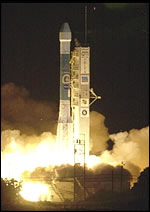
| | Wednesday, 3 July, 2002, 09:02 GMT 10:02 UK Nasa launches comet probe The probe should encounter the first comet next year The US space agency (Nasa) has launched a space probe which scientists hope will go some way to explaining how the planets were formed.
The launch took place successfully at Cape Canaveral in Florida, having been postponed from Monday. The spacecraft will orbit Earth until 15 August, when it will then fire its main engine and begin its comet quest. Closer to the comet The target comets were chosen because of their relative closeness to Earth during encounter time - less than 50 million kilometres (31 million miles). Comet Encke has been seen from Earth more than any other comet. Researchers believe it is a relatively old object that gives off comparatively little gas and dust.
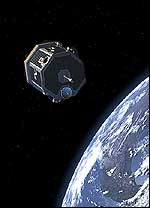
"The key to the Contour mission is to visit a diverse range of comets, from an evolved comet such as Encke, to a younger comet like SW3, or even a new comet never seen in this part of the Solar System," said Mary Chiu of the Johns Hopkins University Applied Physics Laboratory. When it leaves the Earth in August, Contour's orbit will loop around the Sun and back to Earth for a gravitational slingshot manoeuvre to take the probe on to its targets. The procedure alters Contour's trajectory and helps it reach several comets without using much fuel. Contour will fly as close as 100 kilometres (62 miles) to the heart of each comet. To protect it against debilitating high-velocity impacts, it has a five-layer dust shield of heavy metallic fabric. Clues to creation Dr Paul Mahaffy of Nasa's Goddard Space Flight Center says comets are important for the clues they may contain as to the origins of the solar system: "Essentially we can think of them as chemical fossils of processes that happened over four billion years ago when the Solar System was young and the planets were forming."
Contour will travel closer to a comet nucleus than any spacecraft ever has before. Its four scientific instruments will take pictures and measure the chemical composition of the comets' nuclei as well as the surrounding gases and dust. Its main camera, the Contour Remote Imager/Spectrograph, will provide high-resolution images showing rocks and other features on a nucleus as small as four metres (13 feet) across. | |
See also:  22 Jul 02 | Science/Nature 25 Sep 01 | Science/Nature 08 Aug 00 | Science/Nature 05 Apr 00 | Science/Nature Internet links: The BBC is not responsible for the content of external internet sites Top Science/Nature stories now: Links to more Science/Nature stories are at the foot of the page. | ||||||||||||||||||||||||||||||||||||||||||||||||||||||||||||||||||||||||||||||||||||||||||||||||||||||||||||||||||||||||||||||||||||||||||||||||||||||||||||||||||||||||||||||||
| |
|  E-mail this story to a friend E-mail this story to a friend |
| |
| Links to more Science/Nature stories |
| | | ||
 | ||||
 | | Back to top
| ||
| ---------------------------------------------------------------------------------- To BBC Sport>> | To BBC Weather>> | To BBC World Service>> ---------------------------------------------------------------------------------- © MMIII | News Sources | Privacy |