|
 |
 | | | | | | ||||||||||||||||||||||||||||||||||||||||||||||||||||||||||||||||||||||||||||||||||||||||||||||||||||||||||||||||||||||||||||||||||||||||||||||||||||||
| | | You are in: Science/Nature | ||||||||||||||||||||||||||||||||||||||||||||||||||||||||||||||||||||||||||||||||||||||||||||||||||||||||||||||||||||||||||||||||||||||||||||||||||||||||
|
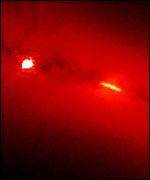
| | Thursday, 6 June, 2002, 10:03 GMT 11:03 UK Hubble gets infrared vision back NGC 4013: Nicmos picks out the ring structure (yellow-orange)
The orbiting observatory had been blind at infrared wavelengths since 1999 when Nicmos, or the Near Infrared Camera and Multi-Object Spectrometer, ran out of coolant.
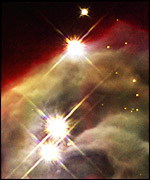
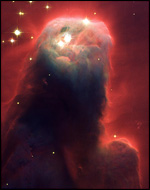
Astronomers have now released the first test images from the revived Nicmos, showing superbly its ability to penetrate deep into the layers of dust that obscure stars from the view of other instruments. One of the images is a near-infrared view of the Cone Nebula, which Hubble exposed in all its glory in April with its new Advanced Camera for Surveys. Turbulent region After Nicmos was first installed on board Hubble in 1997, it made observations of newly forming stars, and regions containing the farthest and faintest galaxies ever imagined.
Nicmos achieved nearly all its scientific objectives before 1999, when the coolant necessary to chill its infrared detectors was depleted. Following its refurbishment earlier this year, astronomers say the Nicmos is back to its best - and point to its observations of the Cone Nebula as justification.
Over millions of years, radiation from hot, young stars located outside the Hubble image has slowly eroded the nebula. Ultraviolet light is heating the edges of the dark cloud, pushing gas into the relatively empty region of surrounding space. Ring of stars Nicmos has also peered into the dusty disc of the edge-on galaxy called NGC 4013 and seen all the way to its galactic core. NGC 4013, which looks similar to our own Milky Way, resides in the constellation Ursa Major, 55 million light-years from Earth.
The extremely bright star near the centre of the picture (top) is a nearby, foreground star belonging to our own Milky Way. The ring-like structure spied by Nicmos encircles the core and is about 720 light-years wide, which is the typical size of most star-forming rings found in such disc-shaped galaxies. The human eye cannot see infrared light, so colours have been assigned to correspond with near-infrared wavelengths.
"It is fantastic that we have restored Hubble's infrared eyesight," said Dr Rodger Thompson, the Nicmos Principal Investigator, based at the University of Arizona, Tucson, US. "Nicmos has taken us to the very fringes of the Universe and to a time when the first galaxies were formed. We can't wait to get back out there." | | See also:  30 Apr 02 | Science/Nature 25 Apr 02 | Science/Nature 12 Mar 02 | Science/Nature 06 Mar 02 | Science/Nature 28 Feb 02 | Science/Nature 14 Apr 00 | Science/Nature Internet links: The BBC is not responsible for the content of external internet sites Top Science/Nature stories now: Links to more Science/Nature stories are at the foot of the page. | ||||||||||||||||||||||||||||||||||||||||||||||||||||||||||||||||||||||||||||||||||||||||||||||||||||||||||||||||||||||||||||||||||||||||||||||||||||||
| |
|  E-mail this story to a friend E-mail this story to a friend |
| |
| Links to more Science/Nature stories |
| | | ||
 | ||||
 | | Back to top
| ||
| ---------------------------------------------------------------------------------- To BBC Sport>> | To BBC Weather>> | To BBC World Service>> ---------------------------------------------------------------------------------- © MMIII | News Sources | Privacy |