|
 |
 | | | | | | |||||||||||||||||||||||||||||||||||||||||||||||||||||||||||||||||||||||||||||||||||||||||||||||||||||||||||||||||||||||||||||||||||||||||||||||||
| | | You are in: Science/Nature | |||||||||||||||||||||||||||||||||||||||||||||||||||||||||||||||||||||||||||||||||||||||||||||||||||||||||||||||||||||||||||||||||||||||||||||||||||
|
| | Tuesday, 30 April, 2002, 17:01 GMT 18:01 UK Hubble's stunning new vision  The Mice: The colliding galaxies will eventually merge
Astronomer Garth Illingworth, deputy leader for the ACS team, said: "The ACS will let us obtain the deepest image of the Universe for the foreseeable future." Researchers report that Hubble is operating superbly following its refurbishment, and they are now looking forward to receiving great pictures from another of Hubble's cameras which was revived during the shuttle mission. Violent cosmos But for the moment, it is the new pictures from the main instrument that are the centre of attraction. "The first astronomical images from the new Advanced Camera for Surveys are remarkable - breathtaking," said Dr David Leckrone, the Hubble Space Telescope Senior Project Scientist.
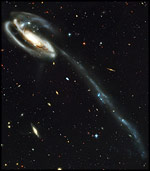
The pictures include a stunning view of a colliding galaxy, dubbed The Tadpole, located 420 million light-years away. The Tadpole, with a long tidal trail of stars, captures the essence of our dynamic, restless and violent Universe. But what came as an unexpected bonus, say researchers, is the enormous number of galaxies beyond The Tadpole - twice the number seen in the legendary Hubble Deep Field (HDF) image taken in 1995. Our own fate The power and potential of the ACS is demonstrated by the fact that The Tadpole picture was taken in one-twelfth the time it took to get the original HDF - and in blue light sees even fainter objects than the HDF. The galaxies seen in the new picture stretch back to nearly the beginning of time.
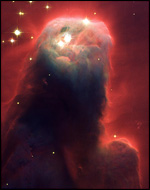
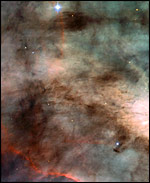
The other pictures include an amazing image of a collision between two spiral galaxies - this has been dubbed The Mice. Such a fate may be in store for our own Milky Way several billion years from now when it collides with our neighbouring galaxy in the constellation of Andromeda. Running computer simulations forward in time shows the two galactic mice will eventually merge, forming an elliptical-like galaxy. The Milky Way and Andromeda could end up the same way. More in June The ACS also imaged the Cone Nebula, a pillar of cold gas and dust that is reminiscent of Hubble's iconic "pillars of creation" in the Eagle Nebula, photographed in 1995. The ACS has also peered into a celestial nursery called the M17 Swan Nebula, revealing what has been called a "watercolour fantasy-world tapestry of vivid colours and glowing ridges of gas".
In the future, the ACS is expected to go beyond the sensitivity of the largest ground-based telescopes to see the faintest objects ever detected. A new cooling system installed on Hubble during the recent servicing mission looks to have revived the Near Infra-Red Camera and Multi-Object Spectrometer (Nicmos). Scientists hope to release in June the first astronomical images taken with the Nicmos since 1998. | |   See also: 25 Apr 02 | Science/Nature 12 Mar 02 | Science/Nature 06 Mar 02 | Science/Nature 28 Feb 02 | Science/Nature 14 Apr 00 | Science/Nature Internet links: The BBC is not responsible for the content of external internet sites Top Science/Nature stories now: Links to more Science/Nature stories are at the foot of the page. | |||||||||||||||||||||||||||||||||||||||||||||||||||||||||||||||||||||||||||||||||||||||||||||||||||||||||||||||||||||||||||||||||||||||||||||||||
|  |
|  E-mail this story to a friend E-mail this story to a friend |
 | |
| Links to more Science/Nature stories |
| | | ||
 | ||||
 | | Back to top
| ||
| ---------------------------------------------------------------------------------- To BBC Sport>> | To BBC Weather>> | To BBC World Service>> ---------------------------------------------------------------------------------- © MMIII | News Sources | Privacy |