
|
 |
 | | | | | | |||||||||||||||||||||||||||||||||||||||||||||||||||||||||||||||||||||||||||||||||||||||||||||||||||||||||||||||||||||||||||||||||||||||||||||||||||||||||||||||||||||||||||||||||||||||||||||||||||||||||||||||||||||||||||||||||||||||||||||||||||||||||||
| | | You are in: Middle East | |||||||||||||||||||||||||||||||||||||||||||||||||||||||||||||||||||||||||||||||||||||||||||||||||||||||||||||||||||||||||||||||||||||||||||||||||||||||||||||||||||||||||||||||||||||||||||||||||||||||||||||||||||||||||||||||||||||||||||||||||||||||||||||
|
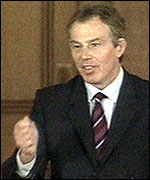
| | Monday, 13 January, 2003, 20:23 GMT Blair vows to disarm Iraq  UN weapons inspections have found nothing so far British Prime Minister Tony Blair has said he is committed to disarming Iraq through the United Nations.
He said he was convinced the UN Security Council would back military action against Iraq if it breached the UN resolution requiring it to give up weapons of mass destruction. The UN chief weapons inspector, Hans Blix, has said his team is getting "fairly good" co-operation from US intelligence but still needs "actionable evidence" of illegal Iraqi weapons. Mr Blix told the BBC his inspectors would act on such specific information as soon as it was forthcoming. Unilateral action Mr Blair told reporters on Monday that if there was a breach in the UN resolution, "we would expect the United Nations to honour the undertakings that were given". However, he said the US and Britain reserved the right to act if any Security Council member attempted to impose a "unilateral bloc" on military action by using its veto. Baghdad denies it owns banned weapons, but the US is building up its forces in the Gulf to back the threat of military action unless Iraq disarms.
Mr Blair said he had "no doubt" that Saddam Hussein was attempting to rebuild his alleged nuclear, biological and chemical weapons arsenal. But the Iraqi leader still had the opportunity to avoid war, the prime minister said. "Even now, Saddam should take the peaceful route and disarm," Mr Blair told his monthly press conference. "If he does not, however, he will be disarmed by force." UN weapons inspectors in Iraq are due to report to the UN Security Council on 27 January - a date seen as key by some within the US administration. But Mr Blair said he did not want to place arbitrary timescales on the work of the inspectors. Meanwhile, the US military has said that its planes have attacked an anti-ship missile launcher in southern Iraq because it posed a threat to Western naval shipping in the Gulf. The US Central Command said precision weapons had been used to hit the launcher near the port of Basra. There are no reports of casualties. Limited time Mr Blix told the BBC that with the American mobilisation of troops in the region, the pressure on the inspection team was building. One day, he said, the UN Security Council might tell the inspectors to move out in order for the military to disarm Iraq. But the working assumption, he said, was for the team to continue under their mandate.
"You will not get a 100% assurance... but you can get very far," he said. "Is this containment sufficient, or do [ the politicians] want to go further at a much, much higher cost?" More time needed Earlier Mohamed ElBaradei, the head of the International Atomic Energy Agency, which also has expert monitors in Iraq, called for Baghdad to co-operate more actively with the inspectors.
He also said the team needed "a few months" to decide whether or not Iraq had a secret weapons programme. Mr ElBaradei and Mr Blix are due to visit Baghdad next weekend to discuss gaps in Iraq's arms declaration. Weapons experts from the IAEA and the UN Monitoring, Verification and Inspection Commission (Unmovic) have made hundreds of visits since returning to Iraq in November. Earlier, a senior US official bluntly warned Iraq that if it did not surrender weapons of mass destruction, it would face military action. The head of the US Defense Department policy board, Richard Perle, told the BBC's The World Today programme that UN inspectors currently scouring Iraq had no chance of finding weapons because they had been hidden. "We must assume that what is unaccounted for is hidden," he said. | |
See also:  13 Jan 03 | Middle East 13 Jan 03 | Middle East 12 Jan 03 | Europe 10 Jan 03 | Middle East 09 Jan 03 | Politics 09 Jan 03 | Middle East 27 Dec 02 | Business 13 Jan 03 | Europe 13 Jan 03 | Middle East Internet links: The BBC is not responsible for the content of external internet sites Top Middle East stories now: Links to more Middle East stories are at the foot of the page. | |||||||||||||||||||||||||||||||||||||||||||||||||||||||||||||||||||||||||||||||||||||||||||||||||||||||||||||||||||||||||||||||||||||||||||||||||||||||||||||||||||||||||||||||||||||||||||||||||||||||||||||||||||||||||||||||||||||||||||||||||||||||||||
 | |
|  E-mail this story to a friend E-mail this story to a friend |
| |
| Links to more Middle East stories |
| | | ||
 | ||||
 | | Back to top
| ||
| ---------------------------------------------------------------------------------- To BBC Sport>> | To BBC Weather>> | To BBC World Service>> ---------------------------------------------------------------------------------- © MMIII | News Sources | Privacy |





 Are people really saying that if there's a breach of the UN resolution, then no action will follow?


