|
 |
 | | | | | | |||||||||||||||||||||||||||||||||||||||||||||||||||||||||||||||||||||||||||||||||||||||||||||||||||||||||||||||||||||||||||||||||||||||||||||||||||||||||||||||||||||||||||||||||||||
| | | You are in: Europe | |||||||||||||||||||||||||||||||||||||||||||||||||||||||||||||||||||||||||||||||||||||||||||||||||||||||||||||||||||||||||||||||||||||||||||||||||||||||||||||||||||||||||||||||||||||||
|
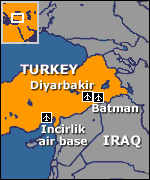
| | Monday, 13 January, 2003, 12:31 GMT US surveys Turkey's military sites  Turkey's Incirlik air base is crucial to US planners US officials have begun inspecting Turkish air bases and ports, as part of preparations for their possible use in the event of a war against Iraq.
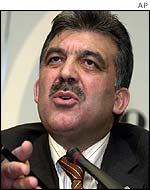
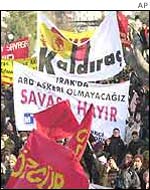
Turkey is strongly opposed to war, and has already said it will not allow to use its military facilities without the United Nations' backing. The US inspections come as Turkish officials say they have won contracts worth more than $500 million during a high-profile visit to Iraq last week. Correspondents say the Turkish Government must perform a tough balancing act, with the US pulling it in one direction, and Muslim public opinion - overwhelmingly hostile to any war - in another. Misgivings The move by Turkish Prime Minister Abdullah Gul to allow US teams to inspect Turkish facilities came a full month after Ankara first had agreed in principle to the inspections.
Disagreement over the legal status of the US personnel carrying out the surveys delayed the decision. Turkish military personnel will accompany the 150 or so American officials, and the surveys are expected to last about 10 days. Reports in Ankara have said the US is seeking to base up to 80,000 troops in Turkey. But any final approval for the stationing of US troops in the event of a war would have to be endorsed by parliament - where it is likely to face serious opposition. The issue is putting huge pressure on relations between the US and the government of Mr Gul, with some Turkish experts predicting that Ankara will in the end bend to the US requests. During the Gulf War of 1991, Turkey's support was critical to the US-led coalition. American planners are hoping to use Turkish bases for strikes against northern Iraq. But many in Turkey fear that a conflict could devastate the country's ailing economy and create instability in the region. Calls for peace Last week, a Turkish trade delegation travelled to Iraq carrying a message for President Saddam Hussein which urged him to abide by UN calls to disarm.
The BBC's Middle East analyst, Roger Hardy, says the visit signalled that Turkey is not ready to break off contacts with the government of Saddam Hussein. He says that Turkey - on the contrary - used the visit to convey to Saddam an urgent message from Mr Gul, that the region wants peace. Mr Gul reiterated his message during his last week's Middle East tour, most recently to Saudi Arabia and Iran. | |
See also:  10 Jan 03 | Europe 10 Jan 03 | Middle East 09 Jan 03 | Politics 09 Jan 03 | Middle East 08 Jan 03 | Middle East 07 Jan 03 | Middle East 27 Dec 02 | Business Internet links: The BBC is not responsible for the content of external internet sites Top Europe stories now: Links to more Europe stories are at the foot of the page. | |||||||||||||||||||||||||||||||||||||||||||||||||||||||||||||||||||||||||||||||||||||||||||||||||||||||||||||||||||||||||||||||||||||||||||||||||||||||||||||||||||||||||||||||||||||
 | |
|  E-mail this story to a friend E-mail this story to a friend |
| |
| Links to more Europe stories |
| | | ||
 | ||||
 | | Back to top
| ||
| ---------------------------------------------------------------------------------- To BBC Sport>> | To BBC Weather>> | To BBC World Service>> ---------------------------------------------------------------------------------- © MMIII | News Sources | Privacy |