
|
 |
 | | | | | | ||||||||||||||||||||||||||||||||||||||||||||||||||||||||||||||||||||||||||||||||||||||||||||||||||||||||||||||||||||||||||||||||||||||||||||||||||||||||||||||||||||||
| | | You are in: Middle East | ||||||||||||||||||||||||||||||||||||||||||||||||||||||||||||||||||||||||||||||||||||||||||||||||||||||||||||||||||||||||||||||||||||||||||||||||||||||||||||||||||||||||
|
| | Monday, 11 November, 2002, 22:49 GMT Khamenei moves to end Iran deadlock 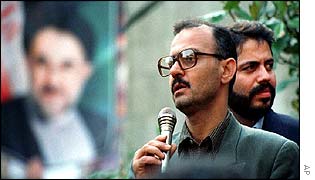 Aghajari is a strong ally of President Khatami
With political tensions steadily rising in Iran, the country's supreme leader, Ayatollah Ali Khamenei, has issued a veiled warning that he might have to call on what he described as "the forces of the people" to step in if the main pillars of the power structure were unable to solve major problems. The Ayatollah's warning came amidst a mounting furore over the sentencing to death of a liberal university lecturer for blasphemy, and a looming crisis over the blocking of the reform process. "On the day when the three powers are unable, or unwilling, to solve major problems, if the leader feels it necessary, he will bring the forces of the people into the arena," Khamenei told a gathering of public officials. He did not spell out exactly what he meant. But "the forces of the people" would normally be taken here as a reference to the Revolutionary Guards and their ancillary basij, or volunteer, forces. Both are ideologically-committed guardians of the Islamic revolution. So this appeared to be a veiled, but nonetheless blunt, warning to the three powers - the government, the parliament, and the judiciary - that if they cannot get their act together, they may be swept aside. Deep frustration The fact that Ayatollah Khamenei felt moved to issue such a warning was a clear indication of how critical the situation is becoming, as tensions mount between reformists, who control the government and the parliament, and hard-liners, who control the judiciary. The reformists are deeply frustrated that their election victories have not enabled them to deliver the changes they promised. President Khatami is trying to break the deadlock through two bills he has presented to parliament, and which are threatening to precipitate a major crisis in the coming weeks. In the meantime, the judiciary has aggravated the situation by sentencing a liberal academic, Hashem Aghajari, to death for apostasy for remarks he made that were critical of the Islamic clergy. Ayatollah Khamenei had harsh words for all three branches:
Perhaps he was hoping that by banging heads together in this way, he could induce the feuding politicians to set aside their differences. But those differences run deep, and previous strictures in the past have made little difference. In the meantime, many people - especially on the right wing - are looking to the leader himself to step in rapidly and end the crisis over Mr Aghajari's death sentence. It has caused so much outrage that many believe it is playing heavily to the advantage of the reformists. | |   See also: 07 Feb 02 | Middle East 09 Nov 02 | Middle East 07 Nov 02 | Middle East 10 Nov 02 | Middle East 02 Nov 02 | From Our Own Correspondent 06 Nov 02 | Country profiles Internet links: The BBC is not responsible for the content of external internet sites Top Middle East stories now: Links to more Middle East stories are at the foot of the page. | ||||||||||||||||||||||||||||||||||||||||||||||||||||||||||||||||||||||||||||||||||||||||||||||||||||||||||||||||||||||||||||||||||||||||||||||||||||||||||||||||||||||
| |
|  E-mail this story to a friend E-mail this story to a friend |
| |
| Links to more Middle East stories |
| | | ||
 | ||||
 | | Back to top
| ||
| ---------------------------------------------------------------------------------- To BBC Sport>> | To BBC Weather>> | To BBC World Service>> ---------------------------------------------------------------------------------- © MMIII | News Sources | Privacy |






