|
 |
 | | | | | | ||||||||||||||||||||||||||||||||||||||||||||||||||||||||||||||||||||||||||||||||||||||||||||||||||||||||||||||||||||||||||||||||||||||||||||||||||||||||||||||
| | | You are in: Middle East | ||||||||||||||||||||||||||||||||||||||||||||||||||||||||||||||||||||||||||||||||||||||||||||||||||||||||||||||||||||||||||||||||||||||||||||||||||||||||||||||||
|
| | Sunday, 10 November, 2002, 17:12 GMT Iran parliament backs reformist bill 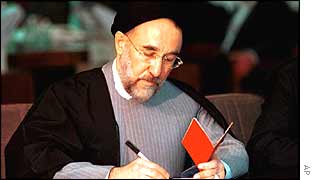 Khatami is accused of seeking dictatorial powers The Iranian parliament has approved the outlines of a bill which would give President Mohammed Khatami the right to suspend rulings by the conservative judiciary. The bill would allow Mr Khatami to suspend decisions by judges which he considered violations of the constitution. The move is seen as an important step for the president's reformist programme.
However, the BBC correspondent in Teheran, Jim Muir, says that the council itself has the final say on the new bills, and is unlikely to approve them. Under the bill approved on Sunday, anyone who violates the constitution can be banned from public office or government posts, initially for three years. The debate on the draft was carried live on Iranian state radio, and when it was put to the vote it gained overwhelming support from the reformist-dominated parliament. Public will Our correspondent says many reformists have been imprisoned after trials which Mr Khatami regards as unconstitutional, and this new bill would enable him to change that situation, rather than merely pointing them out to the Guardians' Council. A case in point, raised during the bill debate, was the sentencing to death last week of a liberal academic, Hashem Aghajari, for apostasy after a speech critical of the Islamic clergy. The verdict caused two members of parliament to submit their resignation in protest on Sunday. Mr Khatami would able to strip judges of their office, and stop practices such as trials occurring without a jury or behind closed doors. Mr Khatami has said the bills will enable him to "better respond to the aspirations of the people" who voted him in as president. Veto power Conservatives have accused Mr Khatami of trying assume dictatorial powers, a charge he has rejected, saying his reforms are necessary for the establishment of democracy and the rule of law. Often in the past, Mr Khatami's efforts to bring about reform have been thwarted by his hardline opponents who control the country's judiciary, media and armed forces. Correspondents say there is little sign that the 12-man Guardian Council, who must approve both bills, are likely to vote to limit their own powers. In the past two years, the council has vetoed more than 50 bills on the grounds that they did not meet the requirements of Islamic law and the constitution. Looming crisis Our correspondent in Tehran says that if the bills are rejected, a political crisis is widely expected to ensue. Deadlock between the Guardian Council and the parliament would put the bills before an arbitrating body, the Expediency Council. That council is headed by the still-influential former President, Hashemi Rafsanjani, the leading conservative candidate in the last parliamentary elections. It too would be expected to quash the bills - unless the Supreme Leader, Ayatollah Ali Khamenei, intervenes to defuse a crisis which could prove fateful for the Islamic regime. | | See also:  09 Nov 02 | Middle East 05 Nov 02 | Middle East 02 Nov 02 | From Our Own Correspondent 06 Nov 02 | Country profiles 05 Oct 02 | Middle East Internet links: The BBC is not responsible for the content of external internet sites Top Middle East stories now: Links to more Middle East stories are at the foot of the page. | ||||||||||||||||||||||||||||||||||||||||||||||||||||||||||||||||||||||||||||||||||||||||||||||||||||||||||||||||||||||||||||||||||||||||||||||||||||||||||||||
| |
|  E-mail this story to a friend E-mail this story to a friend |
| |
| Links to more Middle East stories |
| | | ||
 | ||||
 | | Back to top
| ||
| ---------------------------------------------------------------------------------- To BBC Sport>> | To BBC Weather>> | To BBC World Service>> ---------------------------------------------------------------------------------- © MMIII | News Sources | Privacy |