|
 |
 | | | | | | |||||||||||||||||||||||||||||||||||||||||||||||||||||||||||||||||||||||||||||||||||||||||||||||||||||||||||||||||||||||||||||||||||||||||||||||||||||||||||||||||||||||||||||||||||||||||||||||||||||||||||||||||||||||||||||||||||||||||||
| | | You are in: Middle East | |||||||||||||||||||||||||||||||||||||||||||||||||||||||||||||||||||||||||||||||||||||||||||||||||||||||||||||||||||||||||||||||||||||||||||||||||||||||||||||||||||||||||||||||||||||||||||||||||||||||||||||||||||||||||||||||||||||||||||||
|
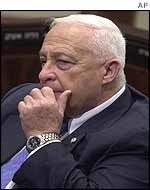
| | Thursday, 31 October, 2002, 20:48 GMT Sharon opts for defence hardliner 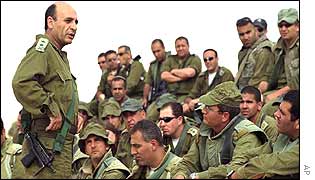 Mofaz has a reputation for adopting harsh tactics Israel's Prime Minister Ariel Sharon has offered former army chief General Shaul Mofaz the post of defence minister to replace Labor Party leader Binyamin Ben-Eliezer. The hawkish General Mofaz has a reputation for adopting a harsh line towards the Palestinians and has advocated the expulsion of leader Yasser Arafat.
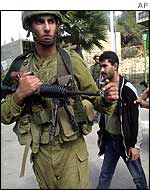
The move has sparked warnings from Mr Arafat, who said that the Mid-East conflict would get worse with a narrow right-wing coalition running Israel. Mr Sharon is looking to ultra-nationalist and religious parties to shore up his shaky government after the moderate Labor Party quit the coalition over a budget row. For the past two years General Mofaz has been in charge of combating the Palestinian uprising. His tactics have brought increasing criticism from left-wingers and human rights groups. Under his command Israeli troops have stepped up targeted assassinations of suspected terrorists, demolitions of their homes and blockades of Palestinian towns and villages.
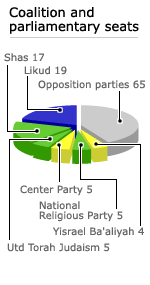
General Mofaz has accused the Palestinian leadership of "being infected from head to toe with terror". According to Israeli media his appointment must be approved by the government and parliament, probably next week. Moshe Ya'alon, previously General Mofaz's deputy, succeeded him in July as army chief of staff, and shares his hardline stance towards the Palestinians. Mr Arafat said the appointments did not bode well for the peace process. "Mofaz on one side, Ya'alon on the other and Sharon over them, what do you imagine will happen in the region?" Mr Arafat told the Arabic satellite television station al-Jazeera. Mr Arafat said he expected a military escalation against the Palestinians. Majority lost Following Labor's departure from the government coalition Mr Sharon has been left with the support of just 55 members of the 120-strong Knesset (parliament). To regain a majority he has been seeking the support of ultra-nationalist and religious parties.
Israel radio reported that Mr Sharon has made contact with the ultra-nationalist National Union-Yisrael Beiteinu Party, which commands seven seats in the Knesset, enough to restore the prime minister's majority. Its chairman, Avigdor Lieberman, however, has previously made clear his party would prefer to take part in elections rather than join Mr Sharon's government. Mr Lieberman is an ally of Mr Sharon's rival for leadership of the Likud Party, Binyamin Netanyahu, who quit Mr Sharon's coalition earlier this year. US relations By and large the political parties that Mr Sharon is courting oppose negotiations with the Palestinians and advocate Jewish settlement expansion in the West Bank.
But the BBC's Barbara Plett in Jerusalem says most observers do not expect radical policy changes. Our correspondent says Mr Sharon is eager to protect his strategic relationship with the United States and Washington has drawn some pretty clear red lines. A narrow right-wing government would probably continue the military policy against the Palestinians and bury even more deeply the chances of reviving a political process. Despite the loss of Labor, Mr Sharon said he would continue leading the country. "I plan to make every effort to establish an alternative government," he told Israeli newspaper Yediot Ahronot. "I have no intention of initiating early elections," he added. Mr Sharon's narrow ad-hoc coalition faces its first crucial test in a no-confidence vote which the left-wing Meretz Party has tabled for Monday. 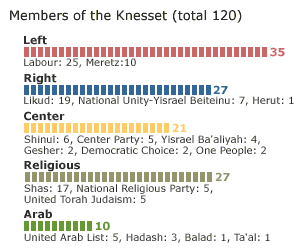 | |
See also:  31 Oct 02 | Middle East 31 Oct 02 | Media reports 30 Oct 02 | Middle East 31 Oct 02 | Middle East 30 Oct 02 | Middle East 28 Oct 02 | Middle East 22 May 02 | Middle East 04 Dec 01 | profiles 31 Oct 02 | Middle East Internet links: The BBC is not responsible for the content of external internet sites Top Middle East stories now: Links to more Middle East stories are at the foot of the page. | |||||||||||||||||||||||||||||||||||||||||||||||||||||||||||||||||||||||||||||||||||||||||||||||||||||||||||||||||||||||||||||||||||||||||||||||||||||||||||||||||||||||||||||||||||||||||||||||||||||||||||||||||||||||||||||||||||||||||||
| |
|  E-mail this story to a friend E-mail this story to a friend |
| |
| Links to more Middle East stories |
| | | ||
 | ||||
 | | Back to top
| ||
| ---------------------------------------------------------------------------------- To BBC Sport>> | To BBC Weather>> | To BBC World Service>> ---------------------------------------------------------------------------------- © MMIII | News Sources | Privacy |