|
 |
 | | | | | | |||||||||||||||||||||||||||||||||||||||||||||||||||||||||||||||||||||||||||||||||||||||||||||||||||||||||||||||||||||||||||||||||||||||||||||||||||||||||||||||||||||||||||||||
| | | You are in: Middle East | |||||||||||||||||||||||||||||||||||||||||||||||||||||||||||||||||||||||||||||||||||||||||||||||||||||||||||||||||||||||||||||||||||||||||||||||||||||||||||||||||||||||||||||||||
|
| | Thursday, 31 October, 2002, 16:09 GMT Profile: Israel's kingmakers 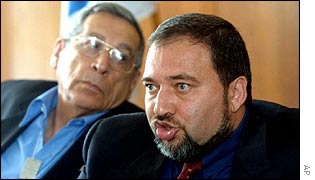 Lieberman's party rejects any notions of land for peace Ariel Sharon is courting the right-wing National Unity-Yisrael Beiteinu Party, an amalgam of three small ultra-nationalistic factions. The party holds seven seats in the Knesset and could provide the prime minister with enough support to limp along with a marginal majority.
Mr Sharon's attempts to co-opt National Unity-Yisrael Beiteinu and avoid going to the polls could be short-lived. The party's chairman and founder of the Yisrael Beiteinu faction, Avigdor Lieberman, has previously balked at the idea of rejoining Mr Sharon's government, favouring new elections instead. Mr Lieberman, who was Mr Sharon's national infrastructure minister, pulled the party out of the coalition in March 2002, in protest against Mr Sharon's decision to lift the siege of Palestinian leader Yasser Arafat's compound in Ramallah. Netanyahu ally The Moldovan-born politician - who earned a reputation as an anti-Arab militant during his student days - is also an ally of Mr Sharon's rival for the leadership of the Likud Party, Binyamin Netanyahu, having served as Mr Netanyahu's chief-of-staff during his tenure as prime minister. National Unity-Yisrael Beiteinu is implacably opposed to the Oslo peace accords and any territorial compromise with the Palestinians. Last October, the party resigned from the government in protest after Mr Sharon pulled the Israeli army out of Palestinian areas of the West Bank city of Hebron, but retracted its decision two days later following the assassination by Palestinian militants of Israeli Tourism Minister Rehavam Ze'evi, who was the leader of Moledet. Mr Ze'evi was succeeded as party leader by Benny Alon. The faction is perceived as the political heir to the anti-Arab Kach movement, which is banned under Israeli law. 'Transfers' Its most controversial policy is that of "transferring" the Palestinians from the West Bank and Gaza to Jordan as a solution to the Israeli-Palestinian conflict. Moledet joined Tkuma in 1999 to form the National Unity Party, led by Benny Begin, the son of former right-wing Prime Minister Menachem Begin. The bedrock of National Unity-Yisrael Beiteinu Party's policies are a belief in the integrity of Jerusalem as Israel's capital and extending Israeli sovereignty over the West Bank and Gaza. The party has made it clear that if it props up Mr Sharon's Government, it will be for a price | |
See also:  30 Oct 02 | Middle East 30 Oct 02 | Middle East 30 Oct 02 | Middle East 30 Oct 02 | Middle East 28 Oct 02 | Middle East 22 May 02 | Middle East 04 Dec 01 | profiles 27 Dec 01 | Middle East Internet links: The BBC is not responsible for the content of external internet sites Top Middle East stories now: Links to more Middle East stories are at the foot of the page. | |||||||||||||||||||||||||||||||||||||||||||||||||||||||||||||||||||||||||||||||||||||||||||||||||||||||||||||||||||||||||||||||||||||||||||||||||||||||||||||||||||||||||||||||
| |
|  E-mail this story to a friend E-mail this story to a friend |
| |
| Links to more Middle East stories |
| | | ||
 | ||||
 | | Back to top
| ||
| ---------------------------------------------------------------------------------- To BBC Sport>> | To BBC Weather>> | To BBC World Service>> ---------------------------------------------------------------------------------- © MMIII | News Sources | Privacy |