|
 |
 | | | | | | |||||||||||||||||||||||||||||||||||||||||||||||||||||||||||||||||||||||||||||||||||||||||||||||||||||||||||||||||||||||||||||||||||||||||||||||||||||||||||||||||||||||||||||||||||||||||
| | | You are in: Middle East | |||||||||||||||||||||||||||||||||||||||||||||||||||||||||||||||||||||||||||||||||||||||||||||||||||||||||||||||||||||||||||||||||||||||||||||||||||||||||||||||||||||||||||||||||||||||||||
|
| | Tuesday, 5 November, 2002, 08:24 GMT Analysis: Sharon government's collapse 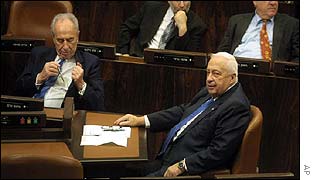 Sharon's "moderation" disappeared with Peres' departure
Israeli Prime Minister Ariel Sharon has bowed to pressure to call early elections in February 2003, eight months ahead of schedule. Whether he liked it or not, the collapse of Mr Sharon's right-left national unity coalition last week marked the beginning of a new election campaign. Mr Sharon had been determined to stay in power at the head of a narrow rightwing government, but he would have been left at the head of an inherently unstable ruling coalition whose small Knesset majority could easily have been erased if Mr Sharon fell foul of the hardline religious right. Meanwhile, the departure of the Labor ministers robbed him of the veneer of inclusivity and moderation which he enjoyed with figures such as peace process architect Shimon Peres in his team. New challenges Israeli electors could be forgiven for approaching a new period of political instability with a sense of ennui.
And the politicians' squabbles might be played out against the backdrop of a US war with Iraq that could bring even more instability to the region. But if elections do not necessarily promise any unblocking of Israel's problems, the next few months could see different personalities coming to the fore who may offer new solutions. Ariel Sharon looks likely to face a challenge from rival Binyamin Netanyahu, whose solution would be even more hardline tactics against the Palestinians. The main reason for Mr Sharon to hold a quick election might have been to thwart the challenge from Mr Netanyahu. Labor Labor is also facing possible leadership changes, with primaries on 19 November pitting current leader Binyamin Ben-Eliezer against dovish rivals Haim Ramon and Amran Mitzna.
Mr Ben-Eliezer may have chosen to distance himself from Mr Sharon now over the issue of funding for Jewish settlements - an issue at the heart of Labor-Likud differences - with an eye to getting the support of the left in his own party during the primaries. A change of leadership, or a new mandate for Mr Ben-Eliezer, may or may not significantly improve Labor chances of wresting power from the right. But many in the Labor Party will be glad that one of the least distinguished periods in its history - half-in, half-out of one of Israel's most hardline governments - has come to an end. At least the party will now be able to devote itself to the business of opposition - whose absence in recent months has rendered Israel's politics, in the words of one commentator recently, "populist, parochial and one-dimensional". | |
See also:  28 Oct 02 | Middle East 22 May 02 | Middle East 30 Oct 02 | Middle East 04 Dec 01 | profiles Internet links: The BBC is not responsible for the content of external internet sites Top Middle East stories now: Links to more Middle East stories are at the foot of the page. | |||||||||||||||||||||||||||||||||||||||||||||||||||||||||||||||||||||||||||||||||||||||||||||||||||||||||||||||||||||||||||||||||||||||||||||||||||||||||||||||||||||||||||||||||||||||||
| |
|  E-mail this story to a friend E-mail this story to a friend |
| |
| Links to more Middle East stories |
| | | ||
 | ||||
 | | Back to top
| ||
| ---------------------------------------------------------------------------------- To BBC Sport>> | To BBC Weather>> | To BBC World Service>> ---------------------------------------------------------------------------------- © MMIII | News Sources | Privacy |