|
 |
 | | | | | | |||||||||||||||||||||||||||||||||||||||||||||||||||||||||||||||||||||||||||||||||||||||||||||||||||||||||||||||||||||||||||||||||||||||||||||||||||||||||||||||||||||||||||||||||||||||||||||||||||
| | | You are in: Middle East | |||||||||||||||||||||||||||||||||||||||||||||||||||||||||||||||||||||||||||||||||||||||||||||||||||||||||||||||||||||||||||||||||||||||||||||||||||||||||||||||||||||||||||||||||||||||||||||||||||||
|
| | Thursday, 19 September, 2002, 13:44 GMT 14:44 UK Challenge ahead for Iraq inspectors 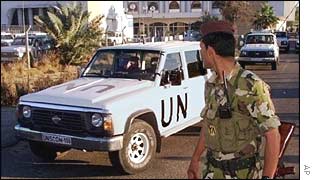 Inspectors pulled out in November 1998
It is four years since the inspectors - then known as Unscom - were pulled out of the country, complaining that the Iraqi Government was preventing them carrying out their work. Now, if a green light comes from the UN Security Council, the first teams - under the new auspices of Unmovic - could be on the ground within a fortnight. The detective work could be about to resume.
The UN intends to use a U-2 spy plane for aerial mapping, water tests for radioactive pollutants, vehicle-mounted Gamma-ray detectors to test the air. The equipment is more sophisticated now, but the goal has been the same for a decade. Paper trails "In the build-up to the Gulf War it was clear that one of the problems had been the Iraqi endeavour to acquire all sorts of weapons of mass destruction," said Lawrence Friedman of King's College in London. "So, removing all this equipment and capability was a big issue in the ceasefire arrangements," he said.
"There would be teams that were specialists in being able to detect chemical weapons, biological weapons and, in the case of the nuclear weapons, inspectors were also brought in from the International Atomic Energy Agency (IAEA)," Ms Bosch said. The teams would vary from five to 25 people, depending on the nature of the mission. A large part of the work was forensics, interviews with Iraqi personnel and the taking of samples at targeted sites - to be able to monitor the evidence of biological or chemical agents. But investigative paperwork also formed an important part of the process and would lead to paper trails which would "reveal the procurement strategy that the Iraqi regime had" in acquiring components. Cat and mouse "So they may buy some chemicals from one country. Or some other chemicals from another country, or a company. So no one country or company was aware that their particular sale would end up in Iraq to be part of a weapons programme," Ms Bosch said.
Saddam Hussein had been playing games with the inspectors, according to Lawrence Friedman. "If you had been dealing with a new regime, then it would have suited them presumably to have a clean break with the past. "But the old regime that was still in power, lied. And so you had this phenomenon which was known as 'cheat and retreat'".
By 1998, the impasse had intensified and the inspectors pulled out of Iraq permanently, deeply frustrated. 'Difficult' task ahead Four years on, and there are moves for a newly-created UN agency to go into Iraq. UN Secretary General Kofi Annan says that given the past history, some delegations and member states "feel that we should not return to business as usual" and that steps should be taken "to ensure that the inspectors are able to go about their work unimpeded".
The new agency has been designed so that it is not as influenced by Washington. But some think a difficult job lies ahead for the inspectors. Ex-weapons inspector Tim Trevan says the Iraqis have had seven years of inspections to learn how the process works "and to develop methods to thwart the efforts of the inspectors and also to re-do, re-build weapons programmes in a way which is much more difficult to detect". Whether or not the Iraqis co-operate, one thing is clear; this new phase will take a very long time indeed. UN officials have identified about 700 potential sites for initial investigation - up to 100 of them being sites where secret weapons work might have begun over the last four years. Just checking the known sites could take a year, and judging by the US position on military action it may be a year Saddam Hussein does not have. | |
See also:  19 Sep 02 | Americas 18 Sep 02 | Americas 17 Sep 02 | Americas 18 Sep 02 | Middle East 17 Sep 02 | Middle East 18 Sep 02 | Middle East Internet links: The BBC is not responsible for the content of external internet sites Top Middle East stories now: Links to more Middle East stories are at the foot of the page. | |||||||||||||||||||||||||||||||||||||||||||||||||||||||||||||||||||||||||||||||||||||||||||||||||||||||||||||||||||||||||||||||||||||||||||||||||||||||||||||||||||||||||||||||||||||||||||||||||||
| |
|  E-mail this story to a friend E-mail this story to a friend |
| |
| Links to more Middle East stories |
| | | ||
 | ||||
 | | Back to top
| ||
| ---------------------------------------------------------------------------------- To BBC Sport>> | To BBC Weather>> | To BBC World Service>> ---------------------------------------------------------------------------------- © MMIII | News Sources | Privacy |