|
 |
 | | | | | | |||||||||||||||||||||||||||||||||||||||||||||||||||||||||||||||||||||||||||||||||||||||||||||||||||||||||||||||||||||||||||||||||||||||||||||||||||||||||||||||||||||||||||||||||||||||||||||||||
| | | You are in: Middle East | |||||||||||||||||||||||||||||||||||||||||||||||||||||||||||||||||||||||||||||||||||||||||||||||||||||||||||||||||||||||||||||||||||||||||||||||||||||||||||||||||||||||||||||||||||||||||||||||||||
|
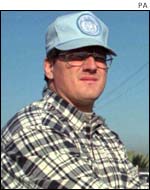
| | Wednesday, 11 September, 2002, 10:35 GMT 11:35 UK Analysis: Is Iraq rearming? 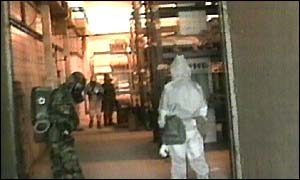 Weapons inspectors did restrict Iraq's weapons programme
The evidence published by a number of think tanks and governments indicates that Iraq still has chemical and biological weapons and that it could, with help, one day develop a nuclear device. However, Iraq's ability to use such weapons is in doubt and it would need significant help from outside before it could make a nuclear bomb. Under UN Security Council Resolution 687, Iraq is not permitted to have chemical, biological and nuclear weapons, and missiles with a range greater than 150km. It faces a dual problem if it seeks to defy the UN. One is to develop the weapons. The other is to deliver them. From a variety of sources, these are the general assessments of the state of play: Iraq's biggest problem is in getting hold of the fissile material (plutonium or enriched uranium) needed to make a nuclear bomb. This would probably have to come from the black market or a rogue government. The latest assessment, from the International Institute for Strategic Studies in London, said that Iraq could assemble a nuclear weapon "within months" if it got the material from abroad.
A recent report in the New York Times claims that it had tried to import special steel to enable it to do just that. The British Government published a document in 1998 saying that had it not been for the Gulf War, Saddam Hussein would have had the bomb by 1993. It said he could build a "crude air-delivered nuclear device in about five years" if he got the right equipment and material from abroad.
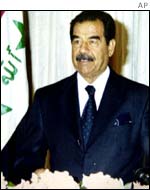
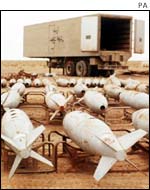
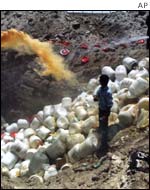
However, a recent assessment from the Carnegie Endowment for International Peace in Washington concludes: "If Iraq were to acquire material from another country, it is possible that it could assemble a nuclear weapon in months." Charles Duelfer of the Center for Strategic and International Studies (CSIS) in Washington and former deputy executive chairman of the UN weapons commission Unscom told a US Senate Committee in February: "While precise estimates of the Iraqi nuclear programme are impossible, what is certain is that Baghdad has the desire, the talent and the resources to build a nuclear weapon given the time to do so." A document released by the United States in advance of President Bush's UN speech on September 12th said that Iraq had in the past 14 months tried to buy thousands of aluminium tubes which could be used for centrifuges needed to produce bomb grade uranium. Iraq has used chemical weapons in battle, both against Iranian troops and against its own population in Halabja. Huge numbers of chemical weapons were destroyed by the UN after the Gulf War. But not all, it seems. The IISS assessment is that Iraq kept hold of a few hundred tonnes of mustard agent and some supplies of VX and sarin from its pre Gulf War stocks. It could also have resumed manufacturing them.
The 1998, a British report said that 31,000 munitions and 4000 metric tonnes of precursor chemicals had not been properly accounted for. As there has been no UN monitoring since 1998, it is impossible to determine exactly how much effort Iraq has put into the further development of chemical weapons but it clearly has the ability to produce them. In 1996, Unscom destroyed a factory designed to make up to 50,000 litres of anthrax, botulin toxin and other agents a year. The Institute of International Studies at Monterey in California estimates that Iraq retains the ability to resume production but it is unclear whether this has happened.
The IISS says that Iraq has probably retained BW agents from before 1991. However, some sources question whether Iraq really intended using BW in battle. Charles Duelfer of the CSIS suggested that it might have been keeping them to use secretly against an enemy city "that would be near impossible to connect to Baghdad as the responsible actor." By 1997, 817 of the 819 Scud rockets Saddam Hussein had were known to have been accounted for. The former UN inspector Scott Ritter has said that Iraq might have salvaged and manufactured enough components to build up a store of between five and 25 missiles. The IISS agrees that he might have about a dozen Scuds hidden away. These could reach Iraq's close neighbours, including Israel, but not Europe.
The Carnegie assessment quoted an unclassified CIA report to Congress that Iraq "probably retains a small covert force of Scud type missiles." Charles Duelfer told the Senate that in his view the number could be about 12 to 14. Iraq has developed, as it is allowed to, two shorter range missiles - the al-Samoud and the Ababil - which have ranges below 150 km. The technology involved could later be used to develop longer range rockets. It is unclear, though, whether Iraq has solved the problems of using missiles to deliver weapons of mass destruction. It seems to have been working on developing shorter range means of delivery. The Washington Post has reported that in Operation Desert Fox in 1998, an RAF Tornado blew the roof off an Iraqi hanger to reveal a number of Czech made L-29 training jets which had been converted into pilotless drones. There are also reports that Iraq still has chemical "drop tanks" to be used by its Mirage F-1 jets. Four of these were found and destroyed by Unscom. Eight others were never found. | |
See also:  05 Sep 02 | Middle East 05 Sep 02 | UK 04 Sep 02 | Middle East 05 Sep 02 | Politics 05 Sep 02 | Americas 21 Sep 01 | Country profiles Internet links: The BBC is not responsible for the content of external internet sites Top Middle East stories now: Links to more Middle East stories are at the foot of the page. | |||||||||||||||||||||||||||||||||||||||||||||||||||||||||||||||||||||||||||||||||||||||||||||||||||||||||||||||||||||||||||||||||||||||||||||||||||||||||||||||||||||||||||||||||||||||||||||||||
| |
|  E-mail this story to a friend E-mail this story to a friend |
| |
| Links to more Middle East stories |
| | | ||
 | ||||
 | | Back to top
| ||
| ---------------------------------------------------------------------------------- To BBC Sport>> | To BBC Weather>> | To BBC World Service>> ---------------------------------------------------------------------------------- © MMIII | News Sources | Privacy |