|
 |
 | | | | | | |||||||||||||||||||||||||||||||||||||||||||||||||||||||||||||||||||||||||||||||||||||||||||||||||||||||||||||||||||||||||||||||||||||||||||||||||||||||||||||||||||||||||||||||||||||||||||||
| | | You are in: Middle East | |||||||||||||||||||||||||||||||||||||||||||||||||||||||||||||||||||||||||||||||||||||||||||||||||||||||||||||||||||||||||||||||||||||||||||||||||||||||||||||||||||||||||||||||||||||||||||||||
|
| | Thursday, 5 September, 2002, 16:42 GMT 17:42 UK Why Arabs fear Iraq attack 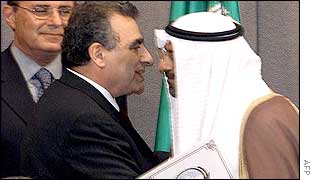 Arab leaders are worried about their peoples' reaction
Arab states fear that Saddam Hussein's regime might not be the only one which is changed if there's a US-led assault on Iraq. That is what is behind the head of the Arab League Amr Moussa's statement that war against Iraq would "open the gates of hell" in the Middle East, with instability across the region. Countries like Jordan and Egypt know they would face an eruption of domestic anger if they did join an American military coalition. They are trying to head off having to make such a choice by defusing the crisis now. That means persuading the Iraqis to let the UN weapons inspectors back in to do their work. The Iraqis say they agree in principle, but the US and Britain say Baghdad's promises are meaningless and that words should be matched with deeds. Arab democracy The first Gulf war was about liberating one Arab state - Kuwait - from occupation by another Arab state, Iraq. Arab governments worry that this war, if it happens, will look like an Anglo-American effort to install a client regime in Baghdad - and that their own peoples will punish them for supporting it.
Saudi Arabia and the other Gulf monarchies are nervous about the threat posed by Saddam; they might be more nervous about the idea of Iraq as a beacon for Arab democracy. Syria's fear is that Iraq could disintegrate into Kurdish, Sunni and Shia entities. It does not want to see partition on ethnic and religious lines given the similarities in the two countries' populations. And then there is the fear of what Israel will do. If attacked by the US, Saddam will attack Israel. Stability Ariel Sharon has said he will hit back - unlike his predecessor in the first Gulf War, Yitzak Shamir, who obeyed the order from Washington to do nothing.
These concerns are never baldly stated. Instead the Arab League repeats the formula that the stability of the whole Middle East is at risk if America goes to war with Iraq. Arab regimes certainly do not like Saddam, but many fear for their own survival if he is toppled. | |
See also:  05 Sep 02 | Middle East 05 Sep 02 | UK 04 Sep 02 | Middle East 05 Sep 02 | Politics 05 Sep 02 | Americas 21 Sep 01 | Country profiles Internet links: The BBC is not responsible for the content of external internet sites Top Middle East stories now: Links to more Middle East stories are at the foot of the page. | |||||||||||||||||||||||||||||||||||||||||||||||||||||||||||||||||||||||||||||||||||||||||||||||||||||||||||||||||||||||||||||||||||||||||||||||||||||||||||||||||||||||||||||||||||||||||||||
| |
|  E-mail this story to a friend E-mail this story to a friend |
| |
| Links to more Middle East stories |
| | | ||
 | ||||
 | | Back to top
| ||
| ---------------------------------------------------------------------------------- To BBC Sport>> | To BBC Weather>> | To BBC World Service>> ---------------------------------------------------------------------------------- © MMIII | News Sources | Privacy |