|
 |
 | | | | | | ||||||||||||||||||||||||||||||||||||||||||||||||||||||||||||||||||||||||||||||||||||||||||||||||||||||||||||||||||||||||||||||||||||||||||||||||||||||||||||||||||||||||||||||||||||||||||||||
| | | You are in: Middle East | ||||||||||||||||||||||||||||||||||||||||||||||||||||||||||||||||||||||||||||||||||||||||||||||||||||||||||||||||||||||||||||||||||||||||||||||||||||||||||||||||||||||||||||||||||||||||||||||||
|
| | Friday, 30 August, 2002, 20:35 GMT 21:35 UK Silent response to US war plans 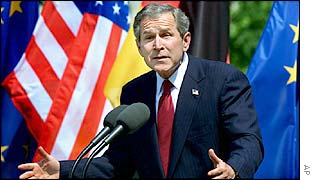 George Bush is looking for international support
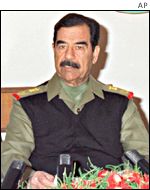
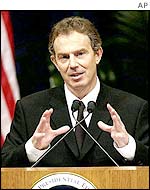
What has been remarkable about the global response to the propaganda offensive by Washington hawks this week, and their call for a pre-emptive strike to remove Saddam Hussein, is the almost deafening silence from would-be endorsers. Rarely has the United States - if indeed this is the policy President George Bush intends to pursue - appeared so isolated. It is no secret that Ariel Sharon's government in Israel backs the idea. Kuwait - the main target of Saddam Hussein's aggression 12 years ago - has good reason to want the Iraqi leader gone. And in Britain, Prime Minister Tony Blair has repeatedly argued that Saddam Hussein's probable possession of weapons of mass destruction makes disarming him a global imperative, although he has never advocated regime change. But none of them has chosen to speak up this week. Inspectors' return Instead, almost all the statements aired around the world have been critical. Perhaps the broadest consensus uniting not just European allies but the Arab world and beyond, is that the top priority still should be trying to negotiate the unfettered return of UN weapons inspectors.
He has just chosen these last two weeks to let his Foreign Secretary Jack Straw make the case, while remaining silent himself. What is less clear cut is what should happen if Saddam Hussein refuses to let UN weapons inspectors back in. Who should decide the next step? And is a military attack then an option? Much of the Arab world has for months insisted no attack on Iraq makes sense while the Israeli/Palestinian conflict continues to enflame the region. European hostility What is significant this week is the chorus of anti-war rhetoric coming even from those Gulf states which the US might need to count on in the event of large scale action: Bahrain, Saudi Arabia, and Qatar. Turkey, Egypt, Iran and Pakistan have also spoken out. So has India, a nuclear power on the brink of war with Pakistan that is now watched closely by the US, for fear a war against Iraq might set a precedent for pre-emptive action.
But it is allies closer to home the US can least afford to alienate. Among Europeans it is the Germans who have been most hostile. Chancellor Schroeder has bluntly ruled out any German troops' involvement in an American "adventure", as he calls it. His conservative election opponent has even reversed his support of US policy overnight. The Bush administration hawks' rhetoric certainly seems to have backfired here dramatically. Proof wanted Canada has been one of several allies to declare that it needs to see evidence that Iraq poses a potentially imminent threat before offering its approval. But the big question for the US is what other members of the UN Security Council think.
China, hosting the Iraqi Foreign Minister this week, remains deeply sceptical. So does Russia, as usual arguing that only the UN Security Council can rule on options. And that position is shared by the French President Jacques Chirac. But French officials have signalled that this is not as anti-American as it sounds - a hint that France might join a US-led coalition, but only under certain conditions. Which brings everything back to the unresolved internal debate in the United States: is going it alone an option? Deadline option President Bush's lawyers have reportedly told him he could probably get away without seeking Congressional approval or a new UN mandate. But his political advisers seem to agree in this mid-term election season it would be madness to ignore the will of Congress. And several weighty opinion makers, such as Richard Holbrooke and James Baker, have argued strongly for a UN endorsement. In Britain this week it has emerged that the government is considering suggesting a new UN deadline for negotiations on the weapons inspectors. Not a bad plan, if it could draw the US away from any unilateral escapade and back into a framework involving the UN Security Council. For a British government desperate not to be caught straddling the divide between unilateral US action and European dissent, it could be a much needed life-line. But it remains to be seen whether Mr Bush will consent to a UN timetable that might limit his options. | |
See also:  29 Aug 02 | Middle East 27 Aug 02 | Middle East 27 Aug 02 | Americas 27 Aug 02 | Business 26 Aug 02 | Middle East Internet links: The BBC is not responsible for the content of external internet sites Top Middle East stories now: Links to more Middle East stories are at the foot of the page. | ||||||||||||||||||||||||||||||||||||||||||||||||||||||||||||||||||||||||||||||||||||||||||||||||||||||||||||||||||||||||||||||||||||||||||||||||||||||||||||||||||||||||||||||||||||||||||||||
| |
|  E-mail this story to a friend E-mail this story to a friend |
| |
| Links to more Middle East stories |
| | | ||
 | ||||
 | | Back to top
| ||
| ---------------------------------------------------------------------------------- To BBC Sport>> | To BBC Weather>> | To BBC World Service>> ---------------------------------------------------------------------------------- © MMIII | News Sources | Privacy |