|
 |
 | | | | | | ||||||||||||||||||||||||||||||||||||||||||||||||||||||||||||||||||||||||||||||||||||||||||||||||||||||||||||||||||||||||||||||||||||||||||||||||||||||||||||||||||||||||||||||||||||||||||||
| | | You are in: Americas | ||||||||||||||||||||||||||||||||||||||||||||||||||||||||||||||||||||||||||||||||||||||||||||||||||||||||||||||||||||||||||||||||||||||||||||||||||||||||||||||||||||||||||||||||||||||||||||||
|
| | Tuesday, 27 August, 2002, 20:57 GMT 21:57 UK Cheney's tough talk cheers hawks 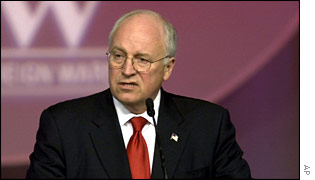 Dick Cheney showed new resolve to attack Iraq
What a difference a few days make. Only last week President Bush was describing himself as a patient man when it comes to Iraq. On Monday his Vice-President sounded anything but patient. In what has been widely seen here in the US as the most forceful case yet for ousting Saddam Hussein, Vice-President Dick Cheney gave the impression there was no time to lose. Why wait, he argued, until the Iraqi leader had nuclear weapons with which to dominate the Middle East at which time it would be more difficult to form a coalition to topple him. Dissent in the ranks For pro-war Republicans, the Vice-President's speech was a breath of a fresh air. For them it signalled a welcome fightback against the recent torrent of more dove-like counsel from inside the party establishment.
More importantly, perhaps, conservative Republicans claim the speech shows the administration has resolved its internal debate and has now decided in favour of war. Not all Republicans agree. The Vietnam War veteran turned influential Republican senator, Chuck Hagel, has said he still sees confusion in the administration. Yes, the Vice-President has spoken out, but why, he asked, has the president remained silent. Some in congress are also complaining about White House claims to need no formal vote from the legislature before going to war. The verdict of Congress overall is that, so far at least, the administration's efforts on Iraq have been disjointed at best, contradictory at worst. Public support As for public opinion, it is emerging from a summer of speculation on Iraq, still broadly in favour of ejecting Saddam by force. Some 57% support the use of ground troops while some 36% are opposed. Interestingly though, those in favour of force drop down to 40% if an invasion were to involve "significant" American casualties. But the president's greatest challenge in rallying support for taking on Saddam remains the reluctance of US allies. While Saddam has few friends in Congress or in the US at large, few of America's traditional allies in Europe or the Arab world show any signs of converting their dislike of the Iraqi leader into support for his removal. | |
See also:  27 Aug 02 | Middle East 27 Aug 02 | Middle East 07 Aug 02 | Middle East 27 Aug 02 | Business 27 Aug 02 | Middle East 26 Aug 02 | Middle East 16 Aug 02 | Middle East 15 Jan 01 | Middle East 24 Aug 02 | Middle East 07 Aug 02 | Middle East Internet links: The BBC is not responsible for the content of external internet sites Top Americas stories now: Links to more Americas stories are at the foot of the page. | ||||||||||||||||||||||||||||||||||||||||||||||||||||||||||||||||||||||||||||||||||||||||||||||||||||||||||||||||||||||||||||||||||||||||||||||||||||||||||||||||||||||||||||||||||||||||||||
| |
|  E-mail this story to a friend E-mail this story to a friend |
| |
| Links to more Americas stories |
| | | ||
 | ||||
 | | Back to top
| ||
| ---------------------------------------------------------------------------------- To BBC Sport>> | To BBC Weather>> | To BBC World Service>> ---------------------------------------------------------------------------------- © MMIII | News Sources | Privacy |