
|
 |
 | | | | | | |||||||||||||||||||||||||||||||||||||||||||||||||||||||||||||||||||||||||||||||||||||||||||||||||||||||||||||||||||||||||||||||||||||||||||||||||||||||||||||||||||||||||||||||||||||||||||||
| | | You are in: Middle East | |||||||||||||||||||||||||||||||||||||||||||||||||||||||||||||||||||||||||||||||||||||||||||||||||||||||||||||||||||||||||||||||||||||||||||||||||||||||||||||||||||||||||||||||||||||||||||||||
|
| | Friday, 9 August, 2002, 21:02 GMT 22:02 UK Analysis: What next after Saddam? 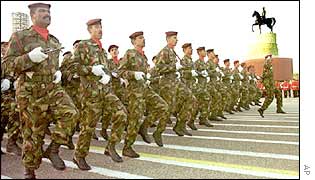 Iraqi opposition forces alone are no match for the army
The unusual meeting of Iraqi opposition groups and senior officials from the State Department and the Pentagon is being portrayed by all sides as an effort at better co-operation in a campaign to unseat Saddam Hussein. But each side has messages for the other. The Bush administration is sure to be telling the opposition that they must unite more effectively. The opposition's role is clearly important in any effort to topple Saddam Hussein. 'After we win' But more critical from a political and diplomatic point of view is what happens after the Iraqi leader is overthrown, if that is to happen. As one US analyst put it, it is vital to have a political framework for "the day after we win the war", if indeed there is to be one.
That is going to be critical in terms of convincing US opinion and the US Congress about the wisdom of any action, as well as US friends and allies. And it is going to be critical in terms of the size and duration of any military and political commitment the United States will have to make to Iraq. Failed uprisings For its part, the Iraqi opposition, after the disappointments and recriminations of the failed uprisings in 1991 after the last Gulf War, is looking for more signs of a real US commitment to overthrowing Saddam Hussein. Opposition leaders have complained that the administration has been talking a lot about "regime change" in Iraq, but doing little. Administration officials insist that President Bush has made no decisions on how to proceed, whether military action is necessary, and if so in what form. For the US administration, too, there are issues of co-ordination to be addressed within its own ranks. The State Department and the Pentagon have tended to pursue their own tracks in terms of opposition support. Each has at times been wary of the umbrella Iraqi National Congress (INC). 'Bay of Goats' Some officials see it fulfilling a role in Iraq similar to that of the Northern Alliance in overthrowing the Taleban in Afghanistan. The INC has strong congressional backing. But the Pentagon has so far been providing only fairly limited training support to the opposition, and the State Department has released only small amounts of the money Congress set aside to help the opposition. As a sign of the Pentagon's past wariness, US Marine General Anthony Zinni, a former head of US Central Command, once suggested that relying on the Iraqi opposition could lead to a "Bay of Goats". He was referring to the Bay of Pigs debacle, when the Kennedy administration agreed to a CIA-backed Cuban-exile invasion to try to overthrow Fidel Castro in 1961. | |
See also:  09 Aug 02 | Middle East 08 Aug 02 | UK 08 Aug 02 | Middle East 07 Aug 02 | Middle East 07 Aug 02 | Middle East 02 Aug 02 | Middle East Internet links: The BBC is not responsible for the content of external internet sites Top Middle East stories now: Links to more Middle East stories are at the foot of the page. | |||||||||||||||||||||||||||||||||||||||||||||||||||||||||||||||||||||||||||||||||||||||||||||||||||||||||||||||||||||||||||||||||||||||||||||||||||||||||||||||||||||||||||||||||||||||||||||
| |
|  E-mail this story to a friend E-mail this story to a friend |
| |
| Links to more Middle East stories |
| | | ||
 | ||||
 | | Back to top
| ||
| ---------------------------------------------------------------------------------- To BBC Sport>> | To BBC Weather>> | To BBC World Service>> ---------------------------------------------------------------------------------- © MMIII | News Sources | Privacy |






