
|
 |
 | | | | | | |||||||||||||||||||||||||||||||||||||||||||||||||||||||||||||||||||||||||||||||||||||||||||||||||||||||||||||||||||||||||||||||||||||||||||||||||||
| | | You are in: In Depth | |||||||||||||||||||||||||||||||||||||||||||||||||||||||||||||||||||||||||||||||||||||||||||||||||||||||||||||||||||||||||||||||||||||||||||||||||||||
|
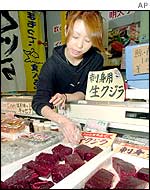
| | Friday, 24 May, 2002, 16:37 GMT 17:37 UK Analysis: Accusations fly at whaling meeting Japan wanted permission for some minke whale hunting
It was billed as the make-or-break meeting which could see the beginning of the end of the moratorium on commercial whaling introduced in 1986.
Before the conference in the Japanese whaling port of Shimonoseki, British fisheries minister Elliott Morley warned that this would be the toughest meeting so far for those nations including the UK which have strongly opposed any moves towards a return of the large-scale killing of whales for their meat.
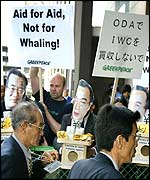
These countries had joined the commission and backed an end to the moratorium, amid allegations - denied by the Japanese - that their votes had essentially been "bought" through promises of financial aid. It was widely predicted that the small majority on the commission would be under threat with the addition this year of countries including Benin, Gabon, Palau and even Mongolia - a landlocked country not known for its interest in whaling. Indigenous exceptions But in the event, despite the most intensive lobbying operation so far by the Japanese, the pro-whaling nations did not achieve even a simple majority on any of the key votes, let alone the three-quarters majority required to overturn the moratorium.
Both camps in the commission have in the past supported exceptions to the whaling ban for small indigenous communities who rely on whale meat to feed themselves and earn their livelihoods. This year Japan had wanted to include in this category some of its own coastal communities, allowing them to catch 50 minke whales. When that was defeated, the Japanese accused its opponents of operating double standards, and used its blocking minority to defeat proposals to extend the quota for Inuit and Chukotka peoples, mainly in Alaska, to catch bowhead whales for their subsistence. Rules changed This sparked fury from the United States delegation and environmental groups, who claimed that the tribes had been used as pawns in a political game, and would now face a real fight for survival.
One little-noticed vote right at the end of the conference, however, could prove significant for future rounds of this annual ritual. A change of rules was passed which ends the current system in which countries pay a flat-rate membership fee for taking part in the commission's proceedings. Far from 'dispassionate' Instead, the level of the charge will be linked to the wealth of each individual nation as calculated by the UN. On fairness grounds, it was a difficult change to oppose. But in practice, it means many more poor countries may be willing in future to join the commission and be "persuaded" by Japan to vote for an end to the moratorium. So the pro-whaling countries have vowed to fight on. But the real outcome of the conference was to demonstrate as never before how remote the whole process has become from any dispassionate debate about the best way to conserve whale stocks and support coastal communities. | |
See also:  24 May 02 | Asia-Pacific 24 May 02 | Asia-Pacific 23 May 02 | Asia-Pacific 20 May 02 | Science/Nature 21 May 02 | Asia-Pacific 25 Apr 02 | Asia-Pacific 04 Oct 01 | Science/Nature 27 Jul 01 | Science/Nature Internet links: The BBC is not responsible for the content of external internet sites | |||||||||||||||||||||||||||||||||||||||||||||||||||||||||||||||||||||||||||||||||||||||||||||||||||||||||||||||||||||||||||||||||||||||||||||||||||
| |
|
| | | ||
 | ||||
 | | Back to top
| ||
| ---------------------------------------------------------------------------------- To BBC Sport>> | To BBC Weather>> | To BBC World Service>> ---------------------------------------------------------------------------------- © MMIII | News Sources | Privacy |







 TALKING POINT
 Sea change?