
|
 |
 | | | | | | ||||||||||||||||||||||||||||||||||||||||||||||||||||||||||||||||||||||||||||||||||||||||||||||||||||||||||||||||||||||||||||||||||||||||||||||||||||||||||||||||||||||||||||||||||||||||||||||||||||||||||||
| | | You are in: Asia-Pacific | ||||||||||||||||||||||||||||||||||||||||||||||||||||||||||||||||||||||||||||||||||||||||||||||||||||||||||||||||||||||||||||||||||||||||||||||||||||||||||||||||||||||||||||||||||||||||||||||||||||||||||||||
|
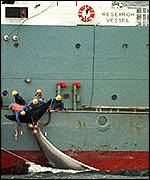
| | Friday, 24 May, 2002, 09:56 GMT 10:56 UK The Inuit case for whaling Remoteness means Inuits have kept traditional ways
Arnold Brower Jnr, a whaling captain from Barrow in Alaska, told BBC News Online that the whale hunt plays a vital role in the lives of the Inuit, making up over half the meat that they eat. "If we didn't have it, we'd have to camp next to the McDonald's in Anchorage or Seattle or somewhere," he says. "If you take the whale hunt away, you take away our culture." He rejects the idea of outside interference in their whaling, and says it's a "human rights issue" for the Inuit. "They have no right to tell us not to eat, that we can't have our breakfast, lunch, or dinner." Lifestyle preserved The Inuit hunt a variety of animals for meat - including caribou, walrus, seal and geese - depending on the season and the migratory movements of the species.
The remoteness of the Inuit has made it easier for them to hold on to their traditional ways than aboriginal peoples to the south - in many reserves, imported shop-bought food and western traditions have caused major changes in lifestyles and cultures. Over-reliance on processed high-fat foods is believed to be one major factor behind a rapid increase in diabetes among North American native populations. By contrast, the hunting traditions of the Inuit are alive and relatively healthy. Landing the whale Whale-hunts are governed by strict rules both in Alaska and the Canadian autonomous territory of Nunavut, developed both from traditions and the demands of conservation.
Once the whale is caught, it is quickly hauled to land and butchered before the heat from the body cooks and partially spoils the meat. Ceremonies and festivals take place while the whale is landed. "Everything is used except for the guts," says Arnold Brower. Bones are left in the sun to bleach and are used in ceremonies or as tourist attractions. 'Devastating loss of species' Mr Brower says the Inuit have good scientific research showing that the bowhead whales are not an endangered species, and their hunt is sustainable. But conservationists take a very different view. "Killing of whales has to be taken in the broadest context of the state of the world's oceans," says David Hocking of the Suzuki Foundation in Canada, set up by the internationally renowned scientist and environmentalist David Suzuki. "United Nations studies show there's been a devastating loss of species on land and in oceans - we are in a dire situation and need to be very careful how we manage things. "We're not doing anyone a favour by saying, 'yes, you've hunted for thousands of years, carry on doing so' - and then the resource will be gone forever." Ben Kovic, the chairman of the Nunavut Wildlife Management Board, is responsible for approving the hunting programmes pursued in the very limited harvest carried out in the autonomous Canadian territory. 'Sustainable' harvest The Inuit of Nunavut have only killed five bowhead whales since 1991, under a strict quota from the Canadian Government - it left the IWC in 1982, partly as a result of pressure from the Inuit. Canada believes such a limited harvest is sustainable - there are an estimated 600 bowhead whales in Canadian waters. There is also regular hunting of the beluga and narwhals which have much larger populations in the Arctic and are not subject to IWC regulations. "People on the opposing side say we shouldn't be doing it," says Ben Kovic. "But for aboriginal people across the circumpolar world, we have country food on our table every day to survive and feed our families, so that we can live and be proud of it and be part of the land." | |
See also:  24 May 02 | Asia-Pacific 23 May 02 | Asia-Pacific 22 May 02 | Asia-Pacific 20 May 02 | Science/Nature 21 May 02 | Asia-Pacific 25 Apr 02 | Asia-Pacific 06 Mar 02 | Asia-Pacific 04 Oct 01 | Science/Nature 27 Jul 01 | Science/Nature Internet links: The BBC is not responsible for the content of external internet sites Top Asia-Pacific stories now: Links to more Asia-Pacific stories are at the foot of the page. | ||||||||||||||||||||||||||||||||||||||||||||||||||||||||||||||||||||||||||||||||||||||||||||||||||||||||||||||||||||||||||||||||||||||||||||||||||||||||||||||||||||||||||||||||||||||||||||||||||||||||||||
| |
|  E-mail this story to a friend E-mail this story to a friend |
| |
| Links to more Asia-Pacific stories |
| | | ||
 | ||||
 | | Back to top
| ||
| ---------------------------------------------------------------------------------- To BBC Sport>> | To BBC Weather>> | To BBC World Service>> ---------------------------------------------------------------------------------- © MMIII | News Sources | Privacy |








 TALKING POINT
 Sea change?