|
 |
 | | | | | | |||||||||||||||||||||||||||||||||||||||||||||||||||||||||||||||||||||||||||||||||||||||||||||||||||||||||||||||||||||||||||||||||||||||||
| | | You are in: Health | |||||||||||||||||||||||||||||||||||||||||||||||||||||||||||||||||||||||||||||||||||||||||||||||||||||||||||||||||||||||||||||||||||||||||||
|
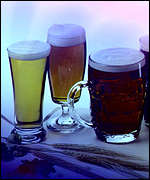
| | Friday, 8 November, 2002, 10:05 GMT Alcohol rapidly confuses the brain  Drinking any alcohol could affect driving abilities Just two glasses of wine or a weak pint of beer can leave your judgment dangerously clouded, warn scientists. Dutch researchers found that a blood alcohol reading of just 0.04% left people unaware that they were making errors. Dr Richard Ridderinkhof, of the University of Amsterdam who led the research, said this should act as a warning over drinking before driving. Even at a level of 40 milligrams of alcohol per 100 millilitres of blood, the researchers found a significant decline in the brain's responses. The legal limit for driving in Britain is 80mg per 100ml. Drinking Dr Ridderinkhof said: "Whereas it is difficult to generalise to a real-life situation, until we know more precisely a cut-off point this certainly would be an indication that drinking and driving together is not a good combination." He said that it was well documented that even one drink could cause a person's reactions to slow and cause them to make more mistakes.
But his team also showed that alcohol compounded these errors by suppressing the brain's ability to recognise them. Usually after a person makes an error the brain would tell them to slow down. "However, after drinking alcohol this sort of control mode is diminished. It's almost gone," said Dr Ridderinkhof. The team studied the brain activity of 14 men, who were social drinkers. They gave them either an alcohol-free wine, enough wine to raise their levels to 0.04, or enough to get them tipsy at 0.10% and then studied their brain capacity. Levels A 0.04% level is reached, for the average man, by drinking just two glasses of wine, two small beers or two small servings of spirits in an hour. Women need lower drink levels to reach the same point.
They gave the men a computer test to line up arrows on a screen and then studied the activity in an area of the brain called the anterior cingulate cortex. Dr Ridderinkhof said: "With the anterior cingulate cortex there is this component that you can see when you record an EEG (electroencephalogram). "Some people call it the 'oops' response. "This is really there when you make an overt error, then you see this brain wave - and it is not there when you give the correct response." The team found that those men who had drunk anything made more mistakes, but their brains did not respond. The results are published in the journal Science. | | See also:  05 Nov 02 | England 05 Nov 02 | Health 16 Apr 02 | Health 08 Apr 02 | Health 08 Apr 02 | UK Internet links: The BBC is not responsible for the content of external internet sites Top Health stories now: Links to more Health stories are at the foot of the page. | |||||||||||||||||||||||||||||||||||||||||||||||||||||||||||||||||||||||||||||||||||||||||||||||||||||||||||||||||||||||||||||||||||||||||
| |
|  E-mail this story to a friend E-mail this story to a friend |
| |
| Links to more Health stories |
| | | ||
 | ||||
 | | Back to top
| ||
| ---------------------------------------------------------------------------------- To BBC Sport>> | To BBC Weather>> | To BBC World Service>> ---------------------------------------------------------------------------------- © MMIII | News Sources | Privacy |