
|
 |
 | | | | | | ||||||||||||||||||||||||||||||||||||||||||||||||||||||||||||||||||||||||||||||||||||||||||||||||||||||||||||||||||||||||||||||||||||||||
| | | You are in: Health | ||||||||||||||||||||||||||||||||||||||||||||||||||||||||||||||||||||||||||||||||||||||||||||||||||||||||||||||||||||||||||||||||||||||||||
|
| | Monday, 30 September, 2002, 00:35 GMT 01:35 UK Doctors investigate Indian herbs 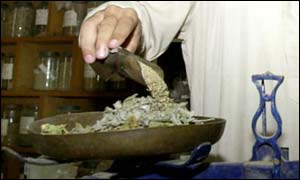 Traditional medicine is popular in India Hundreds of herbs used for centuries by traditional healers in India could soon be on western pharmacy shelves. The Indian Council of Medical Research has launched a series of studies to test the health claims surrounding a variety traditional medicines.
The council is looking at treatments for a range of other conditions used for over a thousand years by practitioners of Ayurveda and Siddha medicine. More effective Professor Ranjit Roy Chaudhury, a member of the council, said that in some cases the herbs may be more effective than Western-style medicines. "We have plants for bronchial asthma, hepatitis and arthritis," he said. "We have other plants which have been shown to be effective for treating sexually transmitted diseases and they have been used in that way by tribal populations for centuries. "We have herbs where you can relieve headache, fever, gastroenteritis, sneezing and coughing. "These conditions can easily be alleviated." Pharmaceutical companies have already expressed an interest in developing some of these remedies commercially for sale in the West. Under some existing schemes, a percentage of the company's profits is given to a local village. Professor Chaudhury acknowledged that in some cases the council will be unable to prove that the herbs work. This is because many of the remedies are based on a combination of plants which taken on their own would not be effective. "There are hundreds of herbs but we are unable at the moment to do very good testing for combinations of plants. "In the Ayurvedic system they use usually combinations. But testing combinations with modern technology is difficult." Common standards The herbal remedies would have to be produced to a common standard before they could ever hope to make pharmacy shelves. Professor Chaudhury said: "There are many herbs that are very effective and I wouldn't hesitate to prescribe them or even take them but only if I am sure it has been standardised." Millions of people living across India use traditional medicine. In some rural areas, between 60% and 70% seek help from Ayurveda and Siddha practitioners. "If this was taken away our health services would collapse," said Professor Chaudhury. However, he added that the tradition is losing out to western-style medicine. "There are vast areas of India where there is no healthcare and people look after themselves with their tradition, their folklore, their tribal systems and their inherent knowledge of plants. "They use this but a lot of this is being lost because the knowledge goes when the folk healer dies." Professor Chaudhury said the council hoped to continue to collect information on the traditional herbs and to identify those which can be scientifically proven to work. This story is featured in the radio programme Health Matters on the BBC World Service. Click here for listening times | | See also:  02 Jun 02 | Health 26 Aug 02 | Health 22 Aug 00 | South Asia Internet links: The BBC is not responsible for the content of external internet sites Top Health stories now: Links to more Health stories are at the foot of the page. | ||||||||||||||||||||||||||||||||||||||||||||||||||||||||||||||||||||||||||||||||||||||||||||||||||||||||||||||||||||||||||||||||||||||||
| |
|  E-mail this story to a friend E-mail this story to a friend |
| |
| Links to more Health stories |
| | | ||
 | ||||
 | | Back to top
| ||
| ---------------------------------------------------------------------------------- To BBC Sport>> | To BBC Weather>> | To BBC World Service>> ---------------------------------------------------------------------------------- © MMIII | News Sources | Privacy |





